Deploy advanced deep learning models, local LLMs, and enterprise AI engines with our top-selling, high-density server configurations optimized for Southeast Asian regional architectures.
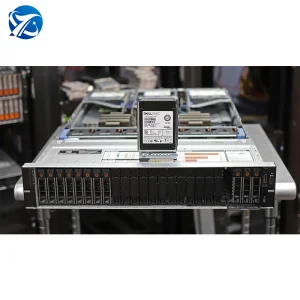
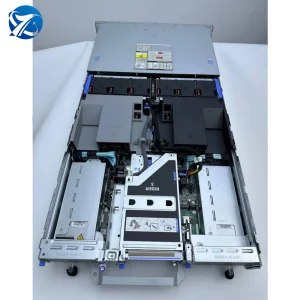
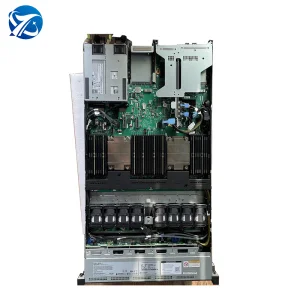
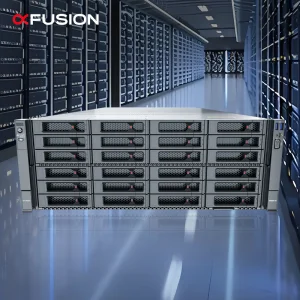
Singapore has positioned itself as the preeminent technological epicentre of Southeast Asia. Driven by the Singapore National AI Strategy 2.0 (NAIS 2.0), the nation is aggressively building sovereign computing capabilities, expanding public sector GPU clusters, and integrating deep learning structures into the fabric of its financial, shipping, and manufacturing systems. However, Singapore’s geographical and resource limitations present unique parameters for hardware deployment. The primary challenge remains building or importing highly efficient, space-conscious, and energy-compliant server infrastructure.
In accordance with the Green Data Center Roadmap released by the Infocomm Media Development Authority (IMDA), data centers operating within Singapore face strict regulations regarding Power Usage Effectiveness (PUE). Modern facilities are heavily incentivized to limit PUE to 1.3 or below. This mandate ripples down to server architecture; operators cannot simply scale hardware without considering thermal envelopes, power factor efficiencies, and cooling mechanisms. High-density servers featuring advanced multi-GPU layouts require state-of-the-art power distribution units (PDUs), specialized PCIe switch configurations, and liquid-cooling capability to align with Singapore’s national sustainability targets.
Moreover, local businesses, from high-volume trading desks in Marina Bay to biomedical research labs in One-North, are transitioning from traditional cloud instances to private, hybrid AI clouds. The rise of local open-weights deployments, particularly DeepSeek and custom localized LLMs, requires servers with massive HBM (High Bandwidth Memory) capacities and high inter-node communication bandwidth. By partnering with advanced global manufacturing facilities, Singaporean enterprises can procure bespoke computing hardware built specifically to balance density, performance, and green efficiency directives.
The global AI server market is experiencing an unprecedented structural shift. Demand has moved decisively past general-purpose computing toward specialized accelerators. The modern AI datacenter is built around massive matrix multiplication engines, where GPUs, TPUs, and custom ASICs act as the primary engines, and high-performance x86 or ARM CPUs function as orchestration managers. This architectural paradigm relies heavily on ultra-fast interconnects, such as NVLink or high-bandwidth PCIe Gen 5 fabrics, to bypass CPU bottlenecks and enable direct memory access (RDMA) across nodes.
Supply chain dynamics dictate the speed at which enterprises can scale. Advanced semiconductor packaging (CoWoS - Chip-on-Wafer-on-Substrate) and global HBM3e fabrication bottle-necks have made procurement a strategic race. Enterprises no longer evaluate system vendors solely on hardware specifications; they evaluate them based on supply chain integration, component sourcing agility, and engineering flexibility. Tier-1 OEM/ODM manufacturers that bridge raw components and custom system integration are playing an increasingly crucial role. By maintaining deep relationships with component suppliers, high-capacity factories can guarantee lead times that traditional brands struggle to match during peak demand cycles.
Global demand is also shifting towards sovereign AI deployments. Nations are recognizing that hosting critical machine learning pipelines on foreign public clouds exposes them to geopolitical risks and regulatory shifts. Consequently, financial hubs like Singapore, Frankfurt, and Tokyo are building out localized private cloud infrastructure. This trend demands server builds that offer robust root-of-trust security protocols, customizable open BMC (Baseboard Management Controller) firmware, and the flexibility to integrate varied GPU acceleration hardware without vendor lock-in.

The Pearl River Delta, with Shenzhen at its heart, remains the global epicenter for hardware engineering, prototyping, and high-volume electronics manufacturing. For AI server procurement, this ecosystem offers significant advantages in lead times, rapid prototyping, and vertical supply chain integration. In a high-complexity industry where PCIe layout routing, thermal dissipation dynamics, and signal integrity must be optimized at the board level, physical proximity between design engineers, SMT (Surface Mount Technology) assembly lines, and raw material suppliers reduces development cycles from quarters to weeks.
Chinese server factories provide unique efficiencies that optimize Total Cost of Ownership (TCO) for global and Singaporean buyers:
By bypassing standard distribution channels and ordering directly from specialized manufacturers in China, Singaporean enterprises can secure enterprise-grade hardware that meets their specific physical, power, and computational metrics at highly competitive price points.
Implementing high-performance servers in Singapore is not a one-size-fits-all endeavor. Different industries require distinct configurations of PCIe bandwidth, GPU topologies, and storage access speeds. Below are the primary application spaces driving AI infrastructure demands within the local ecosystem:
In high-frequency trading and algorithmic risk modeling, latency is measured in nanoseconds. Organizations require GPU workstation and rack servers featuring maximum CPU-to-GPU communications. Systems utilizing high-frequency Intel Xeon or AMD EPYC processors matched with low-latency network interface cards (NICs) supporting RoCE (RDMA over Converged Ethernet) are deployed to ingest real-time market data, run instant predictive analytics, and execute trades.
As the world’s busiest transshipment hub, Singapore leverages computer vision and edge computing to orchestrate port traffic, automate container cranes, and optimize shipping lanes. Our 1U and 2U high-density edge servers are deployed at container yards to run object detection networks in real-time, operating reliably under fluctuating temperature ranges and high humidity environments.
Singapore’s Biopolis district is a hub for global pharma and research. Deep learning models are utilized here for molecular folding simulation, genomic sequencing analysis, and medical imaging synthesis. This research requires servers with massive system memory footprints (such as 512GB to 1TB DDR5 RAM configurations) paired with enterprise NVMe SSD arrays to facilitate fast read/write access to large multi-gigabyte files.
As AI workloads transition from experimental development to scale, physical limitations dictate system architecture. The heat output of modern high-density accelerator chips makes air-only cooling methods increasingly impractical. The industry is responding with a wave of hardware optimizations designed to maximize performance density and structural reliability.
For operations within tropical, power-constrained environments like Singapore, standard fans and heatsinks require immense power simply to move hot air. Server designs are rapidly adapting to support Direct-to-Chip (D2C) liquid cooling. This approach utilizes closed-loop copper cold plates directly contacting the CPU and GPU dies. Liquid coolant absorbs heat directly and transfers it to external cooling towers, achieving high efficiency. Multi-slot server layouts are also engineered to support immersion cooling, where the entire motherboard assembly is submerged in a non-conductive dielectric fluid.
At signal rates of 32 GT/s per lane, PCIe Gen 5 signals suffer severe attenuation when traversing standard FR4 PCBs. High-performance motherboard architectures must implement low-loss PCB materials (such as Megtron 6 or Megtron 7) alongside strategically positioned Retimer and Redriver chips. These silicon components actively reconstruct and boost the high-speed data stream over longer physical distances, ensuring clean communications between the host processor and peripheral GPU baseboards without transaction timeouts or packet drops.
The demand for high computational densities has forced a transition from separate PCIe cards toward integrated baseboards (such as OAM - OCP Accelerator Module, or custom multi-GPU substrates). These baseboards house up to 8 GPUs interconnected via direct high-speed links on a single PCB, dramatically increasing local memory access bandwidth and reducing the latency of inter-device matrix updates during LLM training iterations.
Procuring server infrastructure at scale represents a capital-intensive decision. Enterprise IT buyers and data center managers should evaluate hardware manufacturers against a rigorous matrix of technical, operational, and supply-chain criteria:
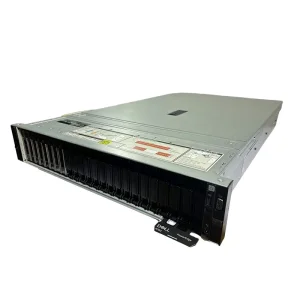
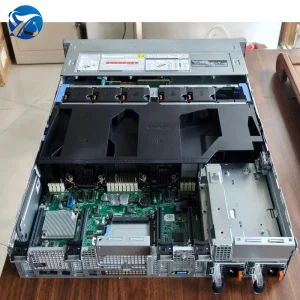
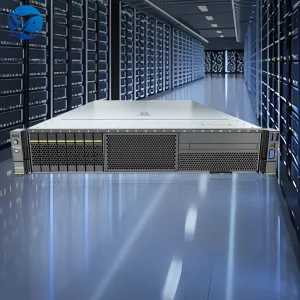
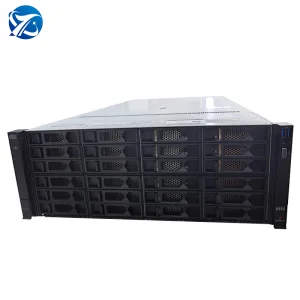
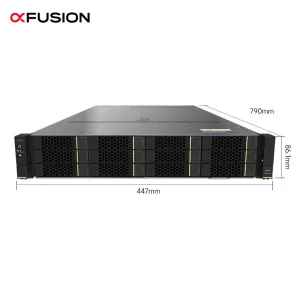
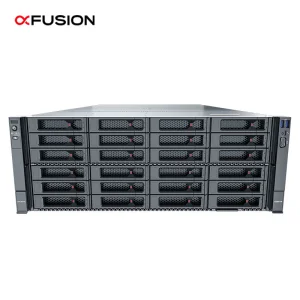
Explore our comprehensive catalog of 1U, 2U, and 4U enterprise-grade systems, fully compatible with various accelerator options and storage configurations for Singapore installations.
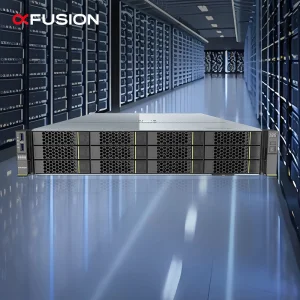
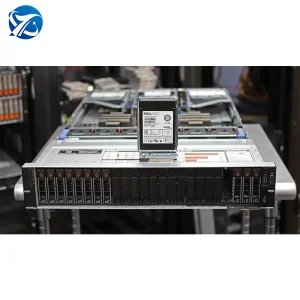
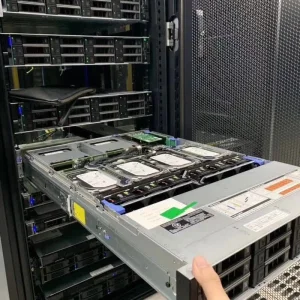
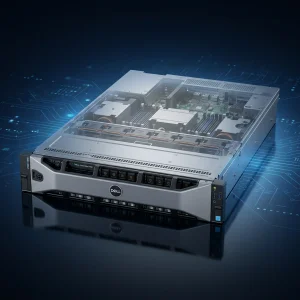
Expert insights addressing common engineering, procurement, and import compliance queries for businesses operating in Singapore and global hubs.
AI Server Technology Co., Ltd. is a professional manufacturer and solution provider specializing in AI computing infrastructure. We focus on the design, development, and production of high-performance servers, PCIe switches, GPU baseboards, motherboard solutions, and retimer boards.
Our products are widely used in AI training, machine learning, high-performance computing (HPC), cloud data centers, and enterprise-level computing environments. With strong R&D capabilities and flexible OEM/ODM services, we are committed to delivering reliable, scalable, and high-efficiency AI server solutions for global customers.
Artificial Intelligence, Deep Learning, HPC, Cloud Computing, High-Density Data Centers.
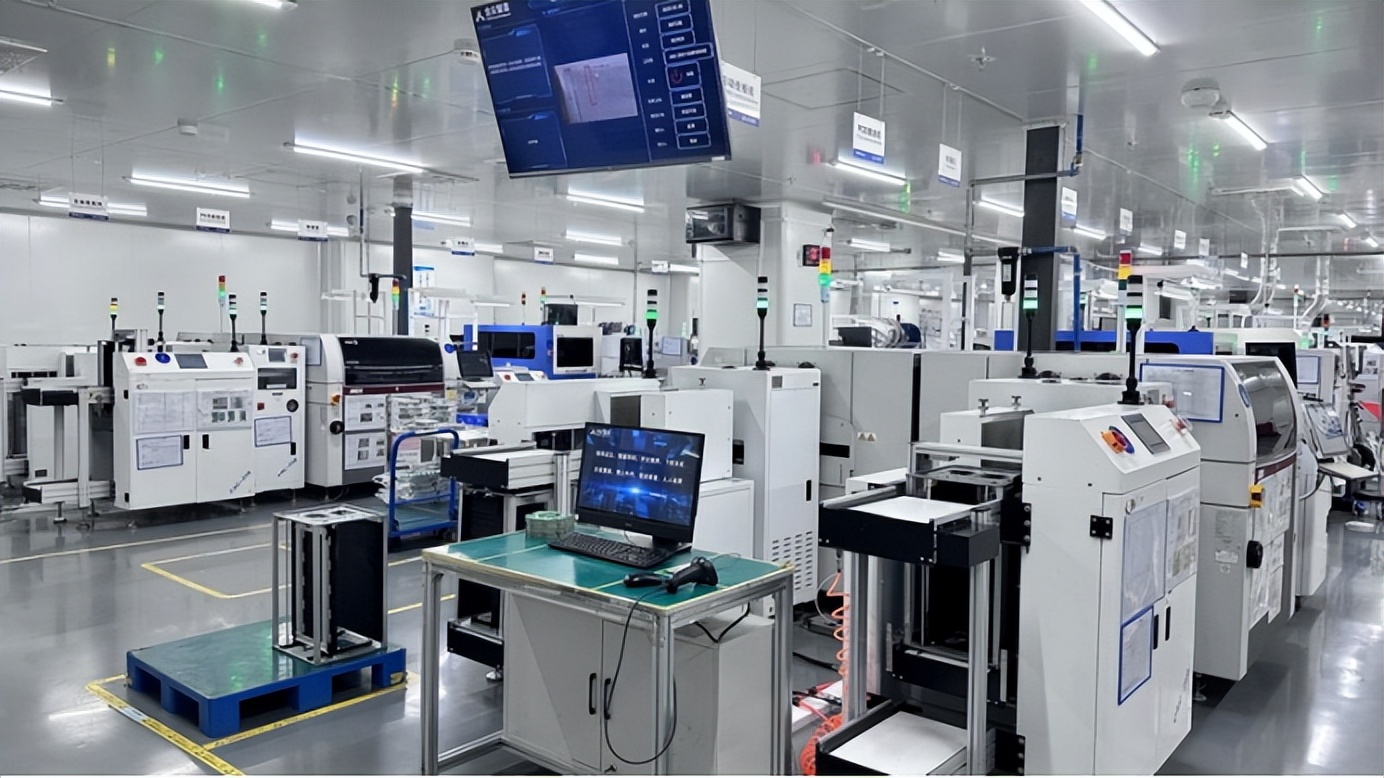
Advanced SMT production lines, high-frequency signal testing, thermal chambers, and automated validation systems.
 Aiserveroem