Leading high-performance GPU and Xeon server platforms optimized for European HPC standards and local Italian enterprise deployments.
Italy is undergoing a profound digital transformation, establishing itself as one of the primary pillars of the European High-Performance Computing (HPC) ecosystem. Anchored by the Bologna Technopole, which hosts the world-renowned Leonardo supercomputer (operated by the Cineca consortium), Italy requires specialized, low-latency, and high-efficiency hardware to fuel its scientific research, industrial modeling, and machine learning pipelines. Under the "Italian National Strategy for Artificial Intelligence", regional hubs stretching from Turin's automotive clusters and Milan's financial district to the manufacturing centers of the Veneto region are aggressively adopting localized AI frameworks.
Deploying AI systems in Italy requires a careful balance between processing power and environmental realities. EU directives like the Energy Efficiency Directive (EED) and local ecological targets mandate that modern datacenters operate under strict Power Usage Effectiveness (PUE) envelopes. Standard computing hardware often fails to meet these criteria due to inefficient power delivery systems and thermal management configurations. As an exporter specializing in the Italian market, we design and configure our AI servers to address these specific localized parameters, bringing energy-efficient, multi-socket acceleration architectures straight to the doorstep of Italian enterprises.
Key Market Driver: The deployment of regional Italian LLM applications (such as localized instances of DeepSeek and LLaMA models) has created a surging demand for GPU systems configured with high PCIe lane distribution, high memory bandwidth, and low-latency interconnects.
At the heart of any high-performance AI deployment lies the routing efficiency of the underlying hardware fabric. Standard compute platforms suffer from severe bottlenecks when transferring massive parameter weights between the system memory, host CPUs, and specialized accelerator cards.
Our systems tackle this computational bottleneck head-on by utilizing high-density PCIe Switch Systems. By engineering physical PCIe topologies from the ground up, we enable high-speed Peer-to-Peer (P2P) communication directly between GPUs. This configuration bypasses the CPU completely during critical training loops, dramatically accelerating tasks such as gradient descent and multi-modal neural network scaling.
Modern AI models require ultra-dense node-to-node configurations. When training large language models (LLMs) locally, inter-GPU bandwidth is the single most critical performance indicator.
Our standard GPU baseboard architecture is designed for low latency. In traditional 2U/4U layouts, routing PCIe Gen 5 signals over 8 inches of PCB material leads to severe attenuation. By embedding signal conditioning Retimer Boards, we reconstruct the high-frequency clock signals, allowing Italian research institutes to run continuous clusters without facing memory bus crashes or CRC (Cyclic Redundancy Check) transmission errors.
While Italy represents the ideal target market for advanced AI infrastructure deployment, the manufacturing speed, component availability, and R&D agility centered in Shenzhen and Dongguan, China, are unmatched globally. This unique combination allows us to offer the best of both worlds: China's rapid industrialization and supply chain efficiency, coupled with localized customization and compliance verification for Italian enterprises.
Our custom OEM/ODM process is structured to handle everything from layout modifications to full system integration. When a client in Milan or Turin requires a specific server motherboard layout to fit existing legacy datacenter cooling cabinets, our engineers can draft, simulate, and prototype a modified motherboard design within weeks—a process that typically takes months in localized European manufacturing centers.
We leverage the deep component integration in the Pearl River Delta to source original chipsets, raw multilayer PCBs, and mechanical server chassis elements at scale. This allows us to mitigate lead times, offering steady GPU and motherboard allocations even during global semiconductor shortages.
All hardware exported to Italy is certified under European Union directives. Our servers undergo rigorous testing for Electromagnetic Compatibility (EMC Directive 2014/30/EU), Low Voltage Directive (LVD 2014/35/EU), and RoHS. Furthermore, we optimize the power management profiles to meet EU Ecodesign requirements (ErP Lot 9).
Deploying tailored computational infrastructures across the primary industrial and scientific nodes of the Italian peninsula.
Turin’s industrial automotive base requires massive high-density computing clusters to run real-time structural simulations, CFD (Computational Fluid Dynamics), and robotic line coordination models. By utilizing our GPU and Xeon multi-socket systems, local manufacturers can process high-resolution telemetry data from the assembly floor, reducing model calculation times from days to hours.
Milanese investment and banking institutions deal with massive datasets that require low-latency processing. Our servers, integrated with SSD NVMe storage and dual-socket Xeon architectures, provide the fast memory throughput needed for training quantitative models, processing real-time risk assessments, and running local customer-service LLMs in a highly secure sandbox environment.
Optimizing the supply chain routes of Europe’s critical ports requires dynamic computing nodes. By deploying GPU servers at local edge hubs, shipping companies can run real-time container scheduling algorithms, predictive crane maintenance programs, and automated harbor traffic management models, making the ports more resilient and energy-efficient.
Preserving and archiving Italy’s historic architecture requires massive computing power to handle high-resolution 3D lidar scans and photogrammetry. Our servers allow local academic institutions and government offices to process spatial datasets, generating NeRF (Neural Radiance Fields) reconstructions of monuments with high fidelity.
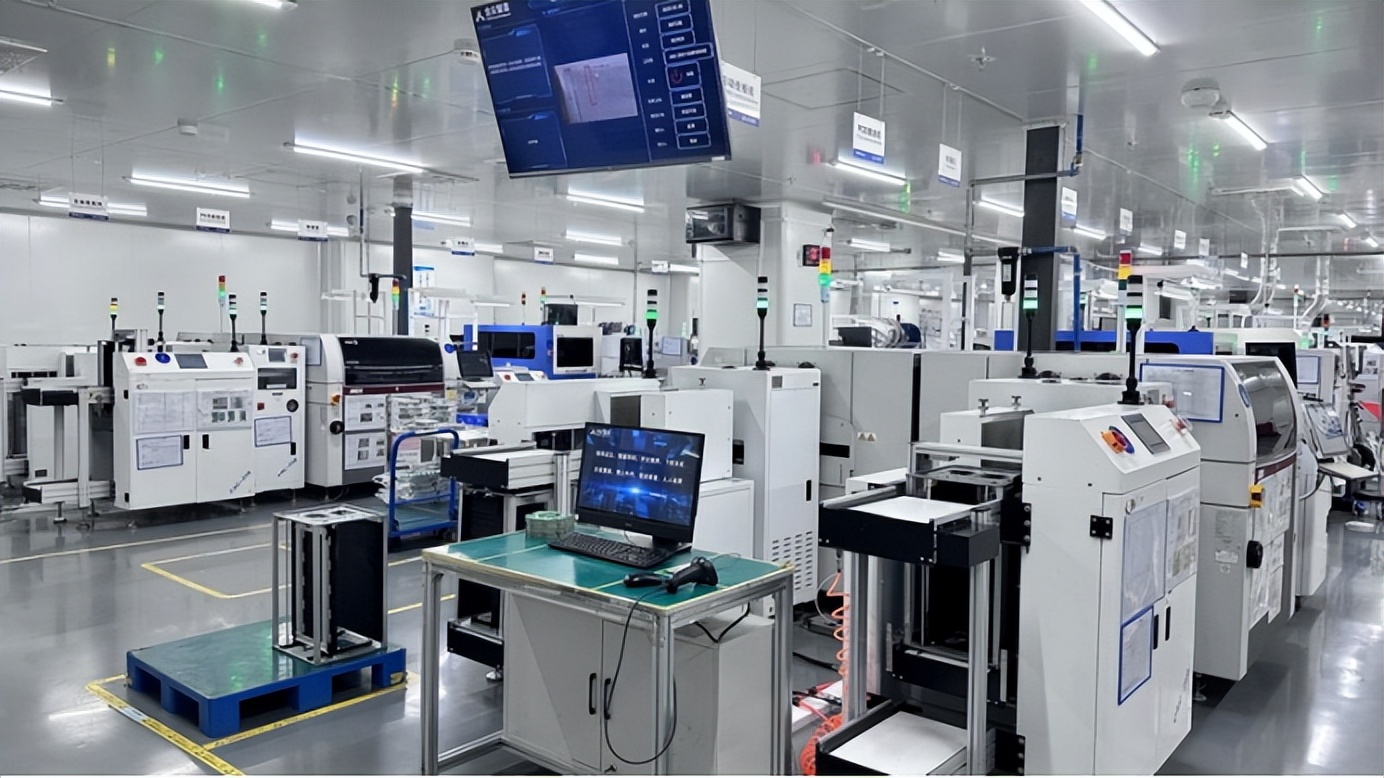
Procuring high-performance AI hardware is complex. Enterprise buyers faces constant challenges, including fluctuating component pricing, uncertain lead times, and system compatibility issues. To mitigate these risks, we have established a strict quality assurance (QA) pipeline at our manufacturing facility. Every server motherboard, GPU baseboard, and PCIe switch undergoes rigorous physical and digital testing before packaging.
We utilize advanced diagnostic tools to simulate continuous heavy workload conditions. Our thermal chambers run systems at 45°C ambient temperature for 72 hours, ensuring the capacitors, VRMs, and active cooling configurations can handle sustained peak operations without thermal throttling. In addition, our close partnerships with global shipping lines allow us to arrange secure customs clearance directly into Italy (under DDP terms if required), minimizing the administrative burden for your local import teams.
Our Supply Chain Commitment: We secure critical hardware components, including memory modules, high-frequency PCBs, and specialized chipsets, ahead of production cycles to guarantee stable delivery timelines for our European partners.
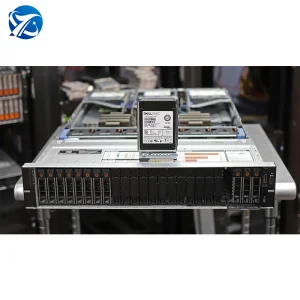
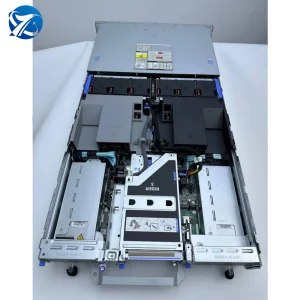
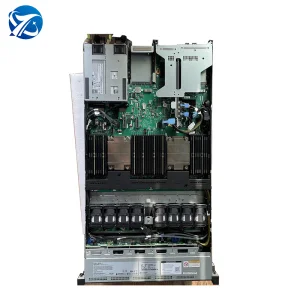
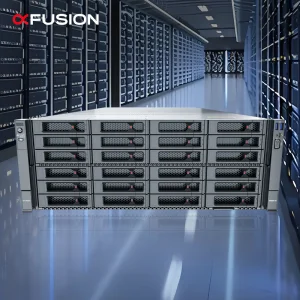
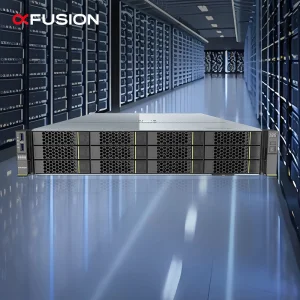
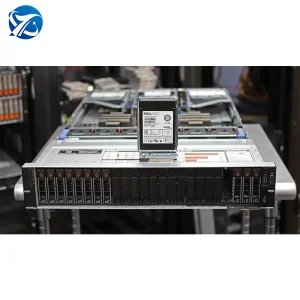
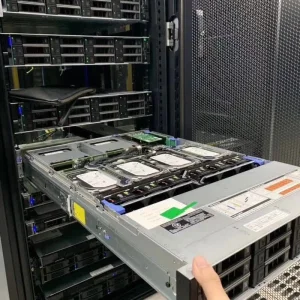
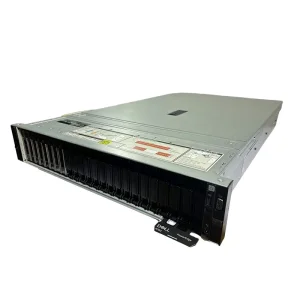
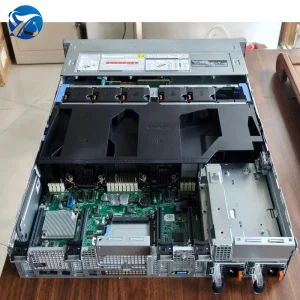
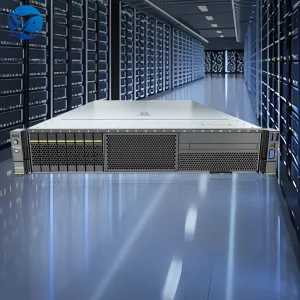
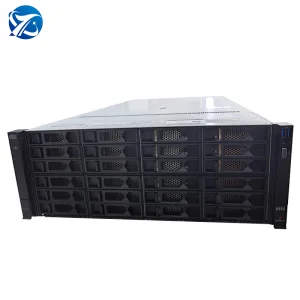
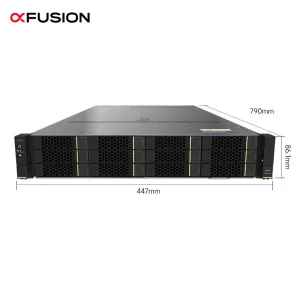
Explore our full line of rackmount systems, custom-built for high computing density and low-latency storage access.
Answers to common integration, compliance, and architectural questions from European datacenter operators.
Our servers utilize high-efficiency Pulse Width Modulation (PWM) fans coupled with custom air-duct shrouding that targets high-temperature zones (like the CPU socket and active PCIe switches). Additionally, we design GPU baseboards to support direct-contact liquid cooling (DCLC) cold plates. This configuration allows data centers in warmer southern regions of Italy to reduce their HVAC cooling load and lower their overall PUE.
We prioritize hardware-level security to comply with the European NIS 2 Directive. Our motherboards support secure boot configurations using Trusted Platform Modules (TPM 2.0). Additionally, our custom BMC firmware can be flashed with OpenBMC, allowing local administrators to conduct full code audits and lock down network interfaces, eliminating potential backdoor vulnerabilities.
PCIe Gen 5 operates at 32 GT/s, which means signal loss occurs rapidly over standard board materials. Without a retimer, the electrical signal representing the data becomes degraded before reaching the accelerator card, leading to system crashes or high packet retransmission rates. Our integrated Retimer Boards rebuild the physical signal at key junctions, ensuring clean eye-diagrams and reliable data flow.
Yes, our systems are optimized for heavy LLM inferencing and training. DeepSeek architectures require vast GPU memory bandwidth. By configuring our motherboards with dual-socket EPYC or Xeon processors, massive DDR5 channels, and high-performance PCIe switch topologies, we enable high throughput across all active GPUs, making local deployments highly efficient.
AI Server Technology Co., Ltd. is a professional manufacturer and solution provider specializing in AI computing infrastructure. We focus on the design, development, and production of high-performance servers, PCIe switches, GPU baseboards, motherboard solutions, and retimer boards. Our products are widely used in AI training, machine learning, high-performance computing (HPC), cloud data centers, and enterprise-level computing environments.
With strong R&D capabilities and flexible OEM/ODM services, we are committed to delivering reliable, scalable, and high-efficiency AI server solutions for global customers. Whether you require standard rackmount systems or customized server designs, our team is equipped to support you from conceptual design through physical testing, final certification, and global shipping.
Artificial Intelligence, Deep Learning, High-Performance Computing (HPC), Cloud Computing, and Next-Generation Enterprise Datacenters.

Contact our technical sales team today for custom configurations, lead times, and detailed pricing options for enterprise GPU and server hardware.
 Aiserveroem