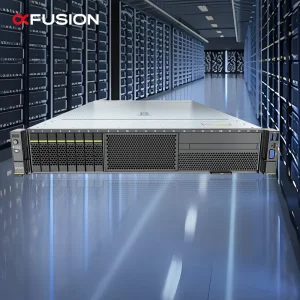
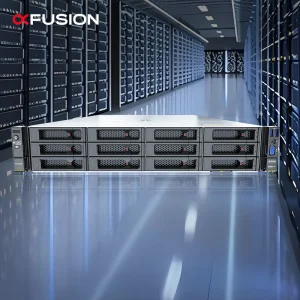
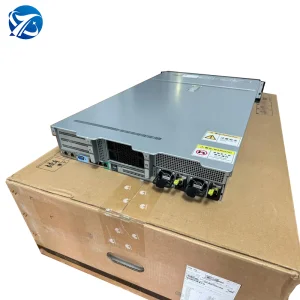
Explore our elite portfolio of enterprise server architectures and high-bandwidth interconnect solutions, engineered for raw performance.
AI Server Technology Co., Ltd. delivers high-performance compute nodes tailored to solve the scaling challenges of modern neural network workloads.
Company Profile:
AI Server Technology Co., Ltd. is a professional manufacturer and solution provider specializing in AI computing infrastructure. We focus on the design, development, and production of high-performance servers, PCIe switches, GPU baseboards, motherboard solutions, and retimer boards.
Our products are widely used in AI training, machine learning, high-performance computing (HPC), cloud data centers, and enterprise-level computing environments.
With strong R&D capabilities and flexible OEM/ODM services, we are committed to delivering reliable, scalable, and high-efficiency AI server solutions for global customers.
Main Products:
Application Areas:
Artificial Intelligence, Deep Learning, HPC, Cloud Computing, Data Centers
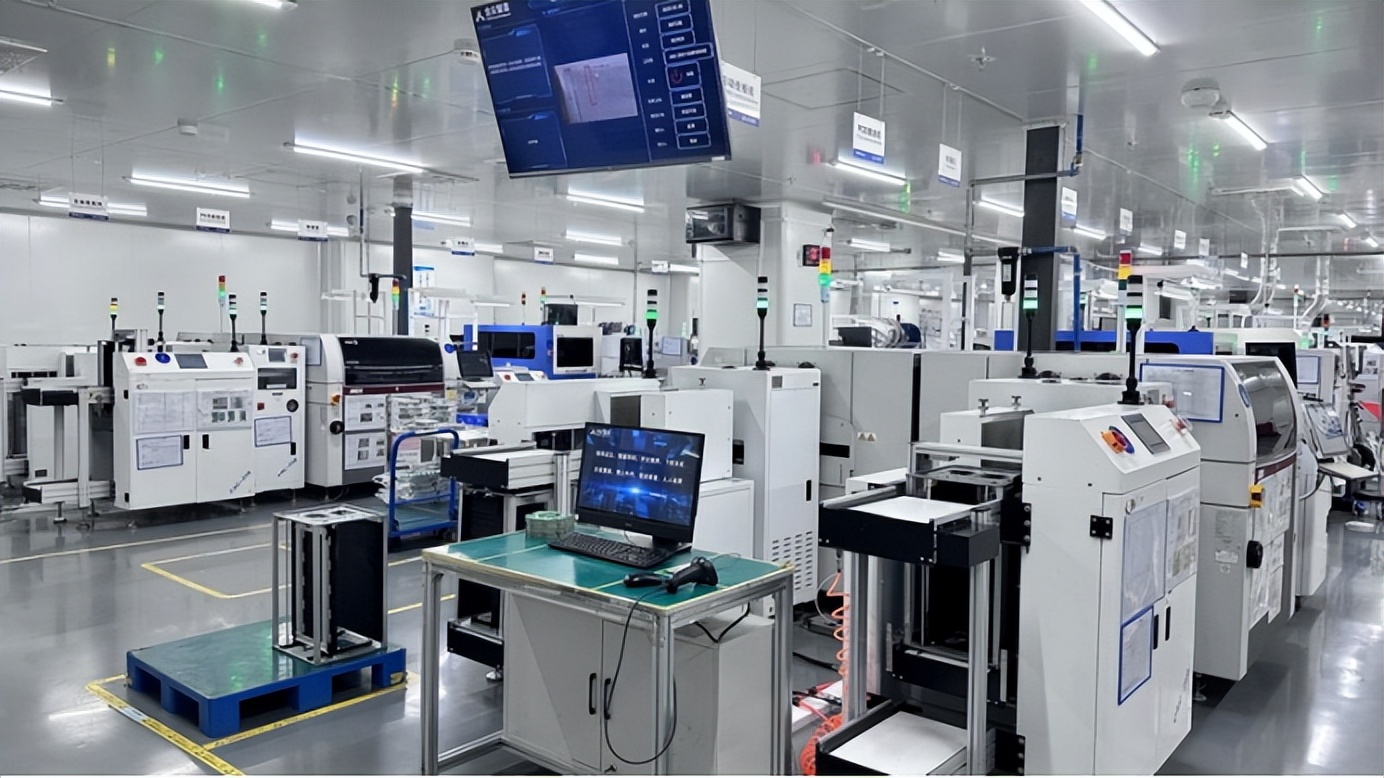
Our custom hardware designs minimize latency bottlenecks and maximize compute density. Our production lines conform to stringent reliability test matrices: High-Temperature Operating Life (HTOL), Signal Integrity (SI) sweeps, and Electromagnetic Interference (EMI) suppression testing.
Through our established partnerships with global chip makers, we secure critical silicon allocations, ensuring our customers experience stable product lifecycles and uninterrupted hardware supply.
Years R&D Experience
Patented Technologies
Global Partner Countries
System Integration Reliability
Analyzing the architectural shifts shaping the future of enterprise compute infrastructure.
The transition toward large language models (LLMs) requires dense GPU cluster environments. As parameter sizes swell, single-node configurations are giving way to scale-out topologies connected via NVLink and High-Speed Ethernet. Standard server form factors struggle under the thermal loads of these setups, mandating custom backplanes and PCIe switch cards built for sustained throughput.
With GPU TDP exceeding 700W, traditional air cooling has hit its physical limits in modern data centers. The industry is moving rapidly toward direct-to-chip (D2C) liquid cooling and full immersion systems. As a key OEM partner, we build custom chassis configurations that support quick-disconnect manifolds, leak-detection telemetry, and direct-contact cold plates designed for the hottest nodes.
Computing latency demands the removal of bus bottlenecks. The integration of PCIe Gen 5.0 and the looming release of PCIe Gen 6.0 demand impeccable signal integrity designs. Memory pooling via Compute Express Link (CXL) is redefining resource provisioning, enabling hosts to access shared pools of memory dynamically with low latency and high bandwidth.
Deciphering the critical requirements and operational checklists that direct hardware procurement decisions.
For procurement officers, hardware architectures are evaluated through a multidimensional lens of reliability, security, and supply chain control. Enterprise environments demand hardware platforms that minimize Total Cost of Ownership (TCO) while offering robust resilience against service disruptions.
Enterprise datacenters cannot rely on closed-loop proprietary firmware that leaves them vulnerable to security blind spots. OpenBMC (Open Baseboard Management Controller) compliance has transitioned from a preference to a strict mandate. We configure server motherboards with physical Root-of-Trust (RoT) cryptographic chips, guaranteeing secure boot cycles, cryptographic validation of system bios, and real-time out-of-band security management.
Operational flexibility depends on how modular the design is. By providing customizable motherboard solutions, PCIe switch structures, and modular power supply chassis, we offer global procurement teams the choice of Level 10 (L10) systems, which include pre-tested barebone assemblies, or Level 11 (L11) systems, which are fully integrated racks. This speeds up deployment times in hyper-scale datacenters.
Sourcing raw capacitors, multi-layered PCBs (up to 20 layers for high-speed signals), and high-grade low-loss dielectrics requires a robust supply chain. We maintain dual-source component configurations and trace all incoming silicon. This guarantees a guaranteed minimum hardware lifespan of 5 to 7 years, protecting capital expenditures against premature end-of-life cycles.

Scalable architectural designs tailored for hyperscale, industrial, and clinical enterprise workloads.
High-density 8-GPU layouts featuring custom PCIe switch systems. Designed specifically for distributed LLM training, reinforcement learning, and high-frequency model checkpointing with redundant multi-kilowatt power architectures.
Rugged, compact compute systems engineered for low latency at the edge. Optimised for autonomous vehicle telemetry, computer vision setups, and remote industrial sensor integration.
High-density CPU clusters paired with FPGA and GPU accelerators. Ideal for genomics research, molecular dynamics modeling, meteorological forecasting, and financial risk simulations.
Open Compute Project (OCP) compliant rack configurations optimized for virtualization density. They feature multi-tenant resource containment and high-speed PCIe Gen 5 networking interfaces.
Operational peace of mind secured through local expertise, rigorous certifications, and global spare distribution.
Exporting high-performance compute hardware to markets like North America, Europe, and the Asia-Pacific region requires compliance with complex international regulatory frameworks. AI Server Technology Co., Ltd. ensures that all manufactured units ship with fully validated compliance documents, preventing customs delays and regulatory audits.
Regulatory Certifications: Our product lines undergo testing at accredited facilities to secure CE, FCC, RoHS, REACH, UL, and VCCI markings. We guarantee our motherboards, power supplies, and logic modules conform to local safety, signal emissions, and hazardous material standards.
Global Support Infrastructure: We provide Tier 3 hardware engineering support directly to enterprise datacenter teams. Through localized warehousing in key logistic hubs, we maintain a rolling stock of spare parts, replacement motherboards, PCIe switch systems, and hot-swappable power supplies. This allows us to offer 24-to-48 hour hardware replacement services, minimizing downtime for critical workloads.
A forward-looking view into our upcoming innovations and hardware milestones.
To keep our partners ahead of the curve, our engineering teams are developing next-generation compute form factors. Below is a summary of the key initiatives driving our current R&D pipeline:
We are currently designing and testing motherboards that support PCIe Gen 6.0, transitioning from NRZ to PAM4 signaling. This upgrade doubles the data rate per lane while requiring advanced board materials (such as Megtron 8) to mitigate insertion loss and signal distortion over longer trace routes.
In addition to traditional PCIe form factors, we are expanding our portfolio of OCP-compliant accelerator cards. This design simplifies physical component installation and allows scaling to multi-GPU arrays using standard layouts.
We target a Power Usage Effectiveness (PUE) below 1.15 through layout redesigns. By placing components closer together to shorten trace paths, optimizing VRM power conversions, and integrating smart fan controls, we minimize parasitics and heat generation inside the chassis.
Answering technical questions regarding custom server motherboards, signal integrity, and ODM processes.
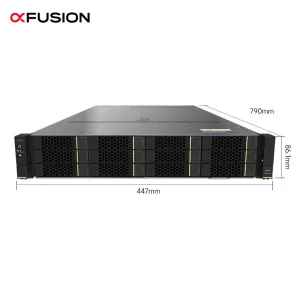
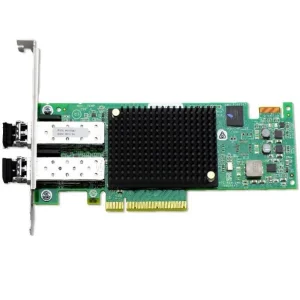
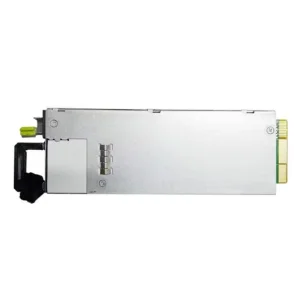
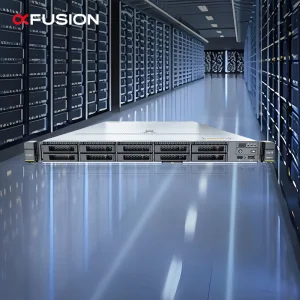
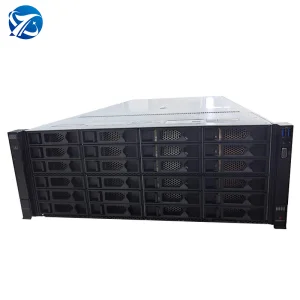
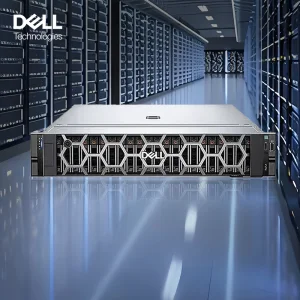
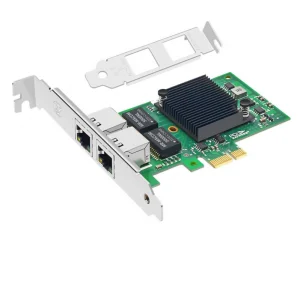
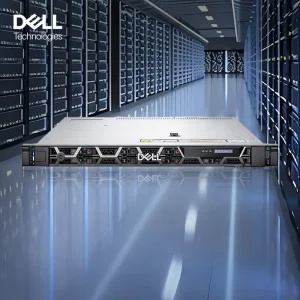
Robust barebone platforms, enterprise storage nodes, and high-performance network adapters.
 Aiserveroem