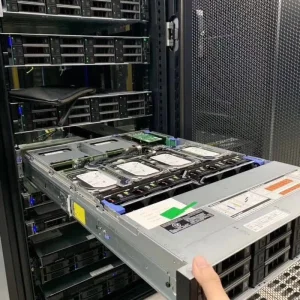
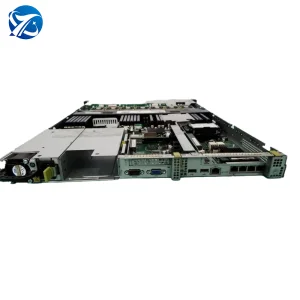
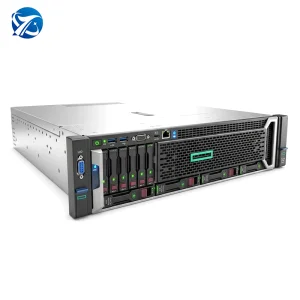
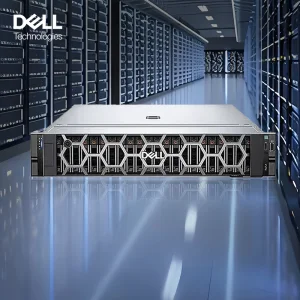
High-performance AI, CPU and GPU infrastructure configurations engineered for maximum density and throughput.
How local LLM hosting, DeepSeek deployments, and high-frequency trading have shifted the global hardware paradigms.
The global computer hardware environment is witnessing an unprecedented architectural transition. Historically, the desktop market was clearly bifurcated: consumer-grade personal computers occupied home offices, while traditional rack servers sat cold in remote data centers. Today, the rapid proliferation of local Large Language Models (LLMs) such as DeepSeek, coupled with the computational demands of AI model inference, has given rise to a new hybrid computing standard. Modern organizations now require high-density desktop workstations and edge compute nodes that deliver server-grade performance in compact, workspace-compatible footprints.
This structural change has fundamentally altered the responsibilities of desktop manufacturers and factories. Building a reliable workstation no longer simply means enclosing a consumer motherboard in a mid-tower chassis. Modern manufacturing necessitates the design of robust multi-layer PCBs, integration of high-density PCIe Gen 5 switch environments, complex thermal dissipation solutions, and low-latency component interconnections. As businesses globally optimize workloads to run on-premise for reasons of data sovereignty and latency, the demand for custom GPU-integrated desktop workstations, edge nodes, and high-density towers has reached historic levels.
By shifting workflows to local edge workstations, companies mitigate high cloud operational expenditures. The convergence of desktop form-factors with server-grade processor families—such as the Intel Xeon Scalable series, AMD EPYC, and custom GPU baseboards—provides professional developers, engineers, and financial analysts with dedicated compute environments free from the overhead of shared public clouds. Chinese manufacturing hubs in Shenzhen, Dongguan, and Suzhou have strategically evolved to support this hybrid hardware tier, pioneering SMT (Surface Mount Technology) advancements for complex motherboard arrays.
Evaluating the specific supply-chain and technological advantages that maintain China's global hardware dominance.
Sourcing high-performance computing systems from Chinese factories offers a distinct competitive advantage driven by comprehensive supply chain integration. In regions like Guangdong and Jiangsu, the physical proximity of component ecosystems forms a hyper-efficient network. Integrated circuit suppliers, high-frequency PCB fabricators, mechanical casing stamping plants, and advanced testing laboratories operate within a 50-mile radius. This geographical density reduces the lead time for custom prototyping from months to weeks.
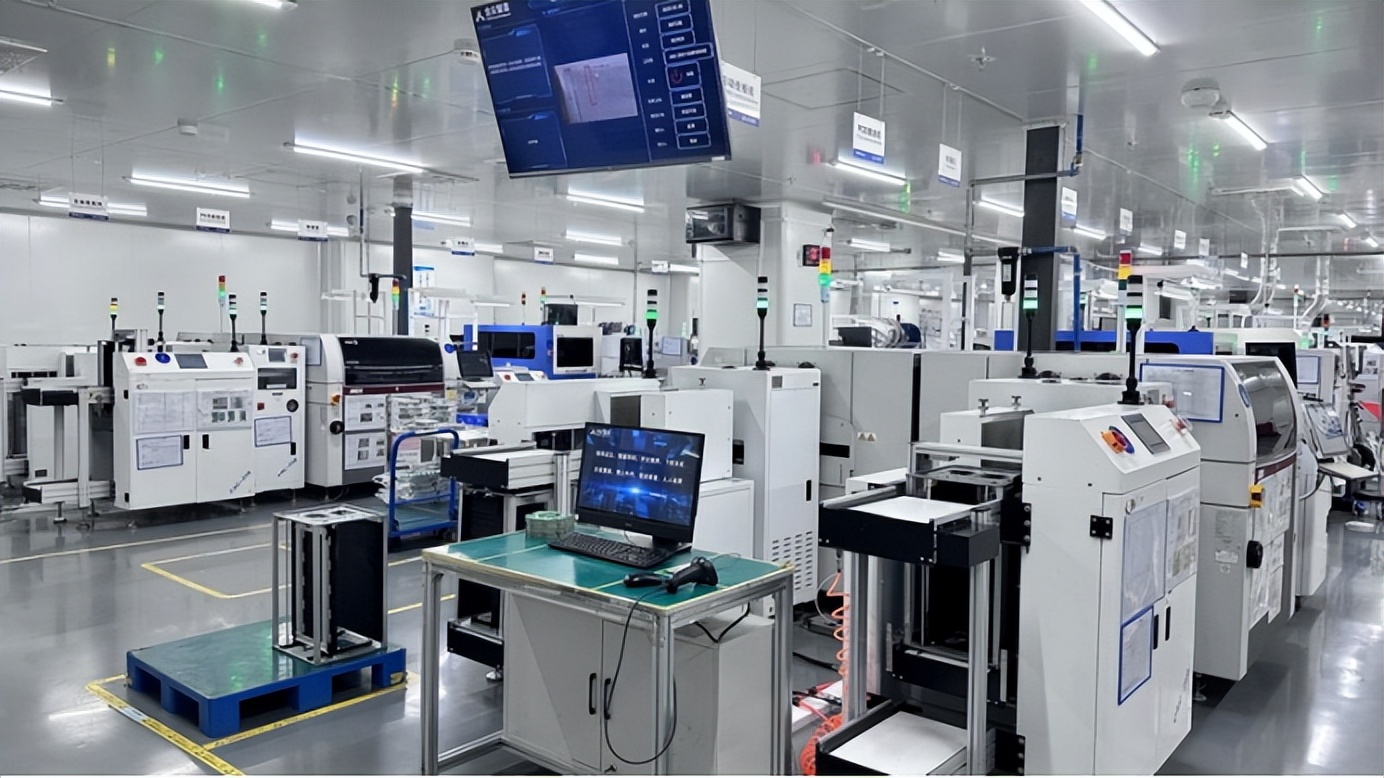
Furthermore, Chinese manufacturing centers lead in implementing automated SMT processes capable of handling micro-pitch ball grid arrays (BGA) and multi-layered motherboard stack-ups (often exceeding 16 layers). This extreme design accuracy is crucial for maintaining signal integrity over high-speed buses like PCIe Gen 5 and Gen 6. Without this manufacturing precision, high-frequency signals quickly degrade, causing data corruption and GPU dropouts. The integration of Retimer boards and high-performance PCIe switches directly onto workstation motherboards requires the specialized manufacturing capabilities that Chinese factories have refined over decades.
OEM/ODM capabilities allow factories to customize BIOS profiles, BMC remote management chips, and chassis graphics to suit specific enterprise deployments.
Production facilities adhere to international ISO, CE, and FCC standards, implementing strict post-assembly thermal stress testing and component burn-in.
Consolidated component logistics and optimized assembly workflows reduce unit costs, enabling businesses to maximize hardware procurement budgets.
Analyzing PCIe switch typologies, signal retimers, and thermal management mechanisms in modern systems.
When engineering high-throughput computing platforms, system architects must prioritize three main pillars: data path routing, thermal headroom, and power delivery network stability. Modern desktop workstations and servers require highly complex interconnect topologies to support modern GPUs and PCIe devices.
In standard computing platforms, processor lanes are limited. When configuring multiple GPU setups, direct lanes from the CPU quickly run out. To circumvent this bottleneck, advanced manufacturers integrate PCIe switches onto the motherboard or GPU baseboards. These switches act as high-speed traffic controllers, dynamically routing data lanes. At PCIe Gen 5 speeds (32 GT/s per lane), electromagnetic interference and signal attenuation become major hurdles. Chinese designers address these challenges using low-loss PCB base materials (such as Megtron 6 or Megtron 7) alongside strategically placed Retimer boards. Retimers regenerate the PCIe signals, extending trace lengths without compromising integrity.
Critical Sourcing Guideline: For systems hosting multiple high-power accelerator cards, demand motherboards engineered with dedicated hardware retimers. This prevents signal degradation over the PCIe bus, ensuring stable data transfer speeds for GPU compute jobs.
Modern processors and GPUs draw significant power, necessitating advanced cooling solutions. A single GPU can generate over 350W of heat, and dual-socket CPU configurations can exceed 700W. Workstations must dissipate this heat quietly, while rack servers prioritize airflow density. Manufacturers optimize these platforms using:
A pioneer in high-performance computational infrastructure development.
AI Server Technology Co., Ltd. is a professional manufacturer and solution provider specializing in AI computing infrastructure. We focus on the design, development, and production of high-performance servers, PCIe switches, GPU baseboards, motherboard solutions, and retimer boards.
Our products are widely used in AI training, machine learning, high-performance computing (HPC), cloud data centers, and enterprise-level computing environments. With strong R&D capabilities and flexible OEM/ODM services, we are committed to delivering reliable, scalable, and high-efficiency AI server solutions for global customers.
Main Manufacturing Capabilities & Product Segments:

Aligning hardware architectures to specific localized enterprise computing needs.
Modern enterprises source systems based on their specific computing environments. Below are the key scenarios where custom desktop workstations and specialized server systems are deployed:
For deep learning workloads, systems must feature dense PCIe arrangements that support multi-GPU setups. These systems are used to build and fine-tune machine learning algorithms, utilizing local computational pipelines to protect proprietary datasets.
Processing sensor data requires high I/O throughput. System configurations must combine high-speed PCIe Gen 5 NVMe drives with high-frequency network interface cards to prevent data transmission bottlenecks.
Financial services rely on high clock speeds and low latency. Factories optimize these systems with customized BIOS settings, liquid cooling loops, and specialized network cards to minimize latency in transaction pipelines.
When procurement managers negotiate with factories, they should look beyond unit prices. Key evaluation factors include:
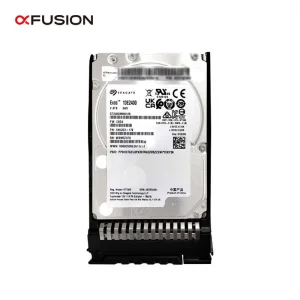
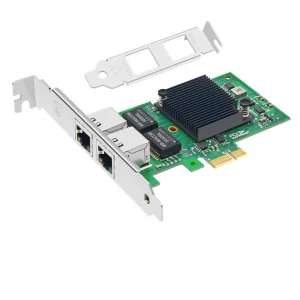
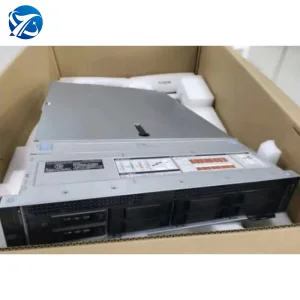
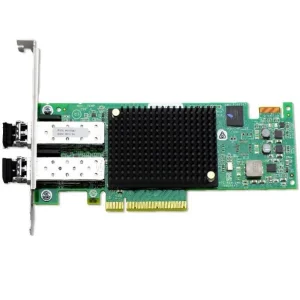
Browse our selection of servers, PCIe solid-state storage, array cards, and high-frequency network interface components.
Technical answers to key architectural, logistical, and sourcing questions.
 Aiserveroem