Top 10 H200 AI Server Manufacturers for Global Buyers

Time:2026-10-29 Author:Mason
0%

Selecting a H200 AI server is not just a matter of comparing processor specifications. Buyers must also assess cooling, power delivery, networking, system integration, and long-term support. A capable h200 ai server manufacturer should explain how its configuration handles demanding AI workloads, not merely display impressive peak-performance figures. Ask for details on rack requirements, deployment timelines, warranty coverage, and software compatibility. Small omissions can become costly at installation.

NVIDIA CEO Jensen Huang said, “The NVIDIA H200 is the first GPU with HBM3e memory, delivering faster, larger memory to accelerate generative AI and HPC workloads.” That distinction matters, but the GPU alone does not determine a server’s real-world value. This guide introduces ten manufacturers for global buyers to evaluate, with attention to product capabilities, deployment experience, and support availability. No ranking fits every organization. A research lab, cloud provider, and enterprise team may need very different systems. The comparison should therefore help readers ask better questions—not replace technical validation. Check each vendor’s current specifications and confirm that quoted configurations match the intended workload. A polished datasheet is useful. It is not the whole story.
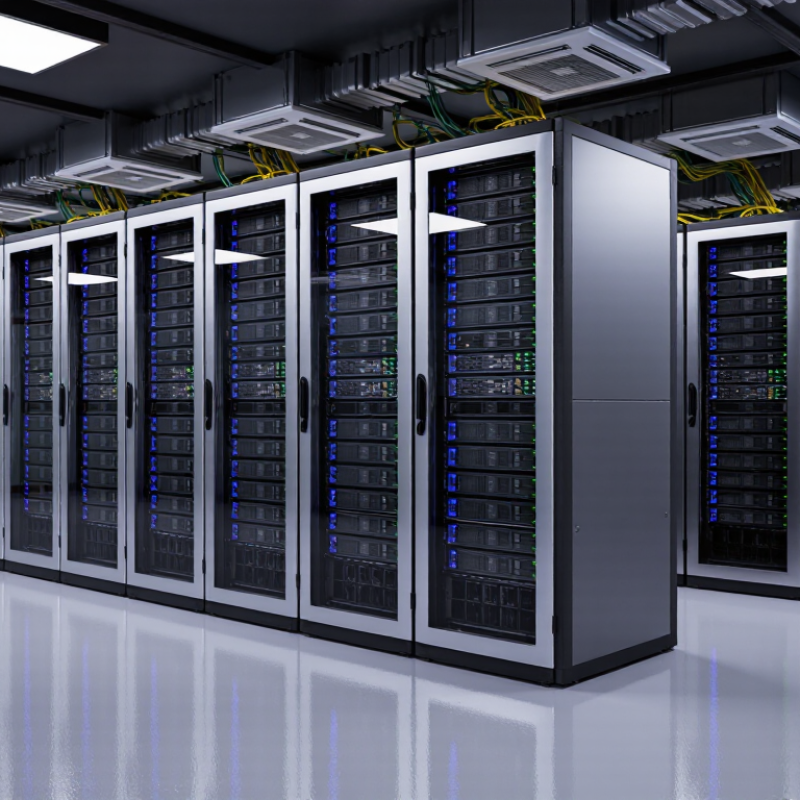
Top 10 H200 AI Server Manufacturers for Global Buyers

Understanding NVIDIA H200 AI Server Architecture

An H200 AI server is best understood as a balanced system, not a single accelerator. Each GPU pairs parallel compute units with high-bandwidth HBM3e memory, keeping model weights and active data close to processing cores. That matters. When memory movement stalls, extra compute capacity cannot rescue throughput. The actual benefit depends on batch size, sequence length, and precision settings; accelerator counts alone reveal little.

Inside a multi-GPU chassis, high-speed links let accelerators exchange data, while host CPUs coordinate storage, networking, and job scheduling. This topology affects how efficiently a model can be split across cards. Check PCIe connectivity, network adapters, and system memory alongside GPU count. Small detail, big impact. An unbalanced layout can leave costly processors waiting for data.

Power delivery and cooling are architectural decisions, not afterthoughts. H200 systems concentrate heat around accelerator trays, so airflow paths, fan settings, and rack power limits influence sustained performance. Liquid cooling can support dense deployments, but it adds plumbing, monitoring, and maintenance needs. There is no universally ideal configuration. Validate real workloads, including long-running inference and distributed training, rather than relying only on peak figures. Even benchmark results can be messy.

How to Evaluate H200 Server Manufacturers for Global Buyers

Evaluating H200 server manufacturers starts with the workload, not the brochure. Ask for a written configuration covering GPU count, processors, memory, storage, and networking. Confirm that the chassis can handle the planned power draw and cooling needs during sustained operation. A short demonstration helps, but documented thermal and performance testing gives buyers stronger evidence. Details matter.

Request test results under conditions close to your own workloads, including temperature readings and network throughput. Check how the manufacturer handles firmware updates, component substitutions, and failures during the warranty period. Ask about spare-parts availability and technical support in your region, with response times stated in writing. Vague answers are a warning sign. Also review delivery estimates and packaging procedures for international shipment.

Compare complete system costs, not just the server price; power, installation, and support can change the budget. Speak with customers running similar workloads, if references are available. A polished specification sheet cannot reveal every operational issue, and even a careful checklist may miss one. That is worth admitting. Before ordering at scale, consider a pilot system and record its performance, noise, temperatures, and service experience. These observations make comparisons more useful than sales claims alone.

Top 10 H200 AI Server Manufacturers and Their Core Offerings

H200 AI server manufacturers differ in how they package compute, cooling, and support. Some focus on dense, multi-accelerator nodes; others deliver rack-scale systems with integrated networking. Their core offerings may include air-cooled servers, direct liquid-cooling designs, configurable OEM platforms, or complete cluster deployments. A few emphasize high-speed storage and network integration. Others concentrate on regional customization and onsite service. Fit matters.

For global buyers, compare the actual H200 configuration, not just the product family. Check accelerator count, memory configuration, power draw, rack dimensions, and supported network options. Ask whether liquid cooling requires facility changes, such as new coolant distribution or maintenance procedures. Not every room is ready. Also confirm lead times, warranty coverage, spare-parts access, and technical support across your operating regions.

A useful shortlist can include vendors known for turnkey integration, modular expansion, workload tuning, and long-term service. Request a written bill of materials and test results for your intended workloads. Then compare performance under sustained use, not only peak figures. These details are less glamorous. They often reveal the practical difference between a server that fits a specification sheet and one that fits a real data center. Supplier claims can be difficult to compare directly, so independent validation remains worthwhile.

Comparing H200 Systems by Performance, Configuration, and Support

H200 systems should be compared by delivered performance, not accelerator count alone. Published specifications list 141 GB of high-bandwidth memory and up to 4.8 TB/s memory bandwidth per accelerator. These figures matter for large models, but they do not guarantee faster workloads. CPU choice, interconnect topology, storage throughput, and cooling can all become bottlenecks. Ask vendors for results on your model, dataset, and software stack—not only peak theoretical throughput. Small differences matter.

Configuration shapes both speed and operating cost. Compare accelerator count, memory capacity, network bandwidth, and power draw per rack. The International Energy Agency estimated that data centers used about 460 TWh of electricity in 2022, roughly 2% of global demand. That makes measured system power and cooling requirements practical buying criteria, not footnotes. Request sustained-load readings; short benchmark runs can hide thermal limits. One caveat: published tests may not match production traffic.

Support deserves the same scrutiny as performance. Check response times, replacement-part availability, firmware maintenance, and help with integrating cluster software. Ask for a documented escalation path and a clear service-level agreement. Also verify whether support covers the whole system or only individual components. A fast server is less useful when a failed network card waits days for replacement. Yet support promises are hard to compare without real customer references, and even detailed contracts cannot prevent every deployment delay.

Illustrative H200 system configurations: aggregate GPU memory

Each H200 GPU provides 141 GB of HBM3e memory and up to 4.8 TB/s of memory bandwidth. Chart values show calculated aggregate memory for configurations with 1, 2, 4, or 8 GPUs; they are not manufacturer-specific system specifications or performance benchmarks.

Key Sourcing Factors for International H200 Server Buyers

International buyers comparing H200 server manufacturers should look beyond headline GPU counts. Check the full configuration: accelerator quantity, memory capacity, networking, rack dimensions, and supported software. Ask for measured power draw under a defined workload, not just a maximum figure. Cooling needs matter too. A server that fits the rack but exceeds its cooling capacity is a costly mismatch.

The International Energy Agency’s Electricity 2024 report estimates that data centers used about 460 TWh of electricity in 2022, with consumption potentially exceeding 1,000 TWh by 2026. This makes power efficiency and deployment planning practical sourcing criteria, not minor details. Request test results, delivery timelines, warranty terms, and written confirmation of regional service coverage. Compare quotations against the same configuration; otherwise, a lower price may simply reflect fewer components. Supplier claims also deserve independent checking.

Tips: Ask for a sample acceptance test before purchase. Include workload, temperature, power, and network checks. Record who handles replacement parts and support in your destination country. Small details matter. A little uncertainty remains until the system is tested onsite.

FAQS

Why is an AI server more than a collection of accelerators?

Its CPUs, memory, network, storage, and cooling must work together. A weak connection can leave expensive processors waiting for data.

Why does high-bandwidth memory matter?

It keeps model weights and active data close to the processing cores. When data movement stalls, extra computing power may not improve throughput. That matters.

What affects performance across multiple accelerators?

High-speed links help cards exchange data, while PCIe connections and network adapters shape the overall layout. Check these alongside accelerator count and system memory.

What workload details should buyers test?

Test realistic batch sizes, sequence lengths, and precision settings. Include long-running inference or distributed training; peak figures alone can paint an incomplete picture.

How should buyers assess power and cooling?

Request measured power use for a defined workload, not only a maximum rating. Check rack limits, airflow, fan settings, and available cooling capacity.

Does liquid cooling solve every thermal problem?

No. It can support dense systems, but adds plumbing, monitoring, and maintenance. The right choice depends on the site and workload.

What should an international buyer confirm before ordering?

Request delivery timelines, warranty terms, and written confirmation of service coverage in the destination country. Also ask who supplies replacement parts.

How can buyers compare quotations fairly?

Match accelerator quantity, memory, networking, rack dimensions, and software support across each quote. A lower price may simply mean fewer components. Check claims independently.

What should a sample acceptance test include?

Specify the workload, temperature, power draw, and network checks. Record the results onsite; early estimates can still be wrong.

Conclusion

This article provides a practical guide for global buyers comparing H200 AI servers. It explains the architecture behind these systems and how components such as accelerators, memory, interconnects, cooling, and power design affect performance. It also outlines how to assess an h200 ai server manufacturer, including engineering capability, configuration flexibility, quality processes, technical support, and experience serving international customers. The guide introduces ten manufacturers and describes their core offerings without relying on brand promotion.

Buyers can use the comparison framework to evaluate systems by workload suitability, performance, expandability, and service coverage. The article also highlights sourcing considerations such as lead times, shipping, warranty terms, documentation, and communication across regions. Together, these insights help organizations define their requirements, compare proposals consistently, and select an H200 server solution that fits their infrastructure, budget, and long-term operational needs.

Mason

Mason

Mason is a seasoned marketing professional with a deep expertise in the company's offerings and a passion for driving brand awareness. With a strong background in digital marketing strategies, he has an innate ability to connect with diverse audiences and effectively communicate product benefits.......