Selecting a reliable h100 server manufacturer requires more than comparing GPU counts. Global buyers must examine cooling, networking, warranty coverage, and regional deployment support. A server with eight H100 GPUs can look impressive on paper. Yet weak airflow or limited power capacity can reduce real-world performance.
Industry data shows why this market deserves careful attention. IDC’s Worldwide AI and Generative AI Spending Guide projects global AI spending to reach approximately $632 billion by 2028. The report highlights infrastructure as a major investment category. TrendForce has also reported strong growth in AI server demand, driven by hyperscalers and enterprise computing projects. These figures support the market’s direction, but they do not guarantee equal quality among manufacturers.
NVIDIA founder and CEO Jensen Huang said, “The entire data center is going to be reinvented.” That statement explains the importance of evaluating complete systems, not isolated accelerators. Leading suppliers may include Supermicro, Dell Technologies, Hewlett Packard Enterprise, Lenovo, ASUS, and GIGABYTE. Their configurations, validation practices, and service networks can differ considerably.
A practical comparison should review H100 SXM or PCIe compatibility, NVLink design, InfiniBand options, liquid-cooling readiness, and power redundancy. Buyers should also verify delivery timelines and local technical support. No ranking stays permanent. Market data changes quickly, and vendor claims deserve independent checking. This guide therefore treats manufacturer selection as a technical and commercial decision, not a simple popularity contest. Some comparisons remain imperfect. That is precisely why transparent specifications and verified deployment experience matter.
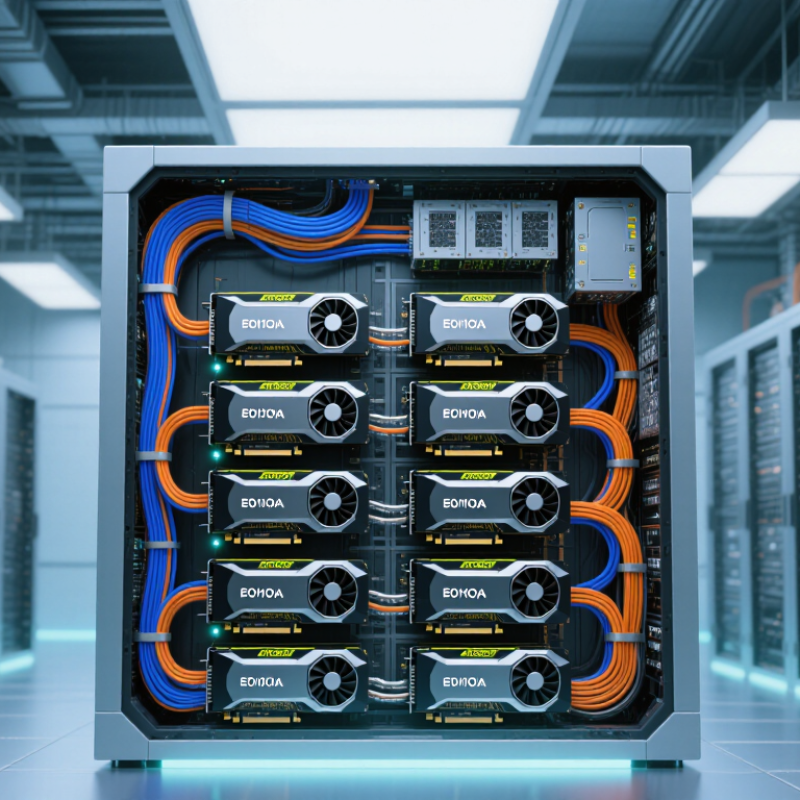
H100 servers are built for demanding AI training, inference, and scientific workloads. The accelerator is available in SXM and PCIe versions, commonly with 80GB of HBM3 memory. SXM configurations provide about 3.35TB/s memory bandwidth, while PCIe versions offer approximately 2TB/s. That difference matters when models repeatedly move large tensors through memory.
The SXM version can reach 700W, so a server needs strong airflow or liquid cooling. Its high-speed interconnect can deliver up to 900GB/s between accelerators, supporting multi-GPU training with lower communication delays.
IDC’s 2024 Worldwide AI and Generative AI Spending Guide projected global AI infrastructure spending at about $154 billion in 2024. Demand is real, but deployment is not simply about buying more accelerators.
Power delivery, rack density, networking, and software compatibility often decide actual performance. I have seen specifications look excellent on paper, yet cooling limits reduced sustained workloads. That remains an easy detail to underestimate.
Tips: Check continuous power, not peak power. Confirm 80GB memory capacity and interconnect topology. Ask for measured performance under your model, not only laboratory results. Also review the MLCommons MLPerf Training reports, but treat benchmark results carefully. Your dataset, precision settings, and communication pattern may produce different outcomes. Allow spare capacity for storage, networking, and future model growth.
Top H100 Server Manufacturers for Global Buyers?
Leading H100 Server Manufacturers Worldwide
Leading H100 server manufacturers worldwide are evaluated by engineering depth, testing discipline, and regional support. Strong manufacturers build systems around high-density GPU workloads, not ordinary rack servers. Their designs usually include liquid or advanced air cooling, redundant power, and carefully balanced airflow. Buyers should examine thermal results under sustained training loads, not only short benchmark scores. A reliable manufacturer can provide configuration sheets, validation records, and clear warranty terms. Experience matters here. Small design gaps can create serious downtime.
Tips: Request a live demonstration or independent test report. Check GPU spacing, power limits, network options, and maintenance access. Ask how quickly replacement parts reach your region. Also, confirm whether local technicians can support installation and firmware updates.
Manufacturers in North America, Europe, and Asia serve different delivery and compliance needs. A capable supplier should explain rack density, electrical requirements, noise levels, and data-center compatibility in plain language. Look for support that covers deployment, monitoring, and fault diagnosis after delivery. Customer references from research labs or enterprise AI teams can strengthen credibility. Still, no supplier is perfect. Some published performance figures may reflect ideal conditions rather than daily operations. Buyers should compare complete system costs, including cooling, cabling, software integration, and service coverage. A careful evaluation may take longer, but it reduces expensive surprises.
Top H100 Server Manufacturers for Global Buyers?
Comparing H100 Server Designs and Configurations
For global buyers, H100 server design matters more than a familiar supplier name. A practical comparison starts with the accelerator layout: eight SXM modules, PCIe cards, or a mixed architecture. SXM systems usually deliver stronger interconnect performance, while PCIe designs can simplify upgrades and deployment. The choice should follow model size, training scale, and available rack power. Small details matter.
A dense eight-accelerator chassis may draw several kilowatts under sustained load. It needs efficient airflow, redundant power supplies, and a rack plan that supports heat removal. Liquid cooling can improve thermal stability, but it adds plumbing, service procedures, and facility requirements. During acceptance testing, I would check GPU error logs, inlet temperatures, network bandwidth, and recovery after a power event. Peak benchmark scores are not enough.
Configuration quality also depends on host processors, memory capacity, local NVMe storage, and high-speed fabric adapters. Balanced memory prevents the accelerators from waiting for data. Fast storage helps with large datasets, although storage speed cannot repair poor data pipelines. Buyers should request documented burn-in results, firmware versions, warranty response times, and spare-part policies. I would still leave room for doubt. Supplier specifications can look precise, yet real performance changes with software versions and workload patterns. A careful trial using the buyer’s own models often reveals more than a polished datasheet.
Global buyers selecting an H100 server should begin with workload fit, not the lowest quoted price. Confirm whether the system uses PCIe or SXM GPUs, because architecture affects bandwidth, cooling, and expansion options. Request a detailed configuration sheet showing GPU count, memory, CPU model, RAM capacity, storage, network adapters, and power supplies.
Operational evidence matters. Ask the manufacturer for recent benchmark results using your intended framework and model size. A server handling model training may need high-speed GPU interconnects, while inference workloads may prioritize memory capacity and network latency. Inspect the cooling design, especially for dense racks. Each unit may draw substantial power and require reliable airflow or liquid cooling. Measure your facility first.
Support quality can decide the purchase. Check response times, spare-part availability, remote diagnostics, firmware practices, and warranty coverage in your region. Confirm electrical certifications, export documents, delivery terms, and local installation support. Request serial-number tracking and acceptance testing before payment. A clear test report is better than confident sales language.
Some buyers overlook software compatibility. Verify drivers, container support, virtualization needs, and security controls with your technical team. We have seen specifications change during negotiation, so every component should appear in the final contract. I would also leave power headroom. It costs more, but crowded racks expose weak planning quickly. No selection process is perfect; reviewing assumptions with an independent engineer can reveal expensive mistakes.
| Evaluation Dimension | Recommended Buyer Requirement | Relevant H100 Configuration Fact | How to Verify Before Purchase | Priority |
|---|---|---|---|---|
| Accelerator Form Factor | Select SXM, PCIe, or NVL according to workload scale and server design. | H100 SXM is designed for high-bandwidth multi-GPU systems; H100 PCIe is designed for broader server compatibility; H100 NVL uses paired PCIe GPUs for large-memory inference and training workloads. | Request the exact accelerator form factor, mechanical drawings, and platform compatibility list. | Critical |
| GPU Count per Node | Choose 1, 2, 4, or 8 accelerators per server based on model size, parallelism, and available power. | Eight-GPU systems are commonly used for dense AI training, while four-GPU and two-GPU systems can simplify deployment and reduce initial capital cost. | Confirm the bill of materials, GPU-to-GPU topology, and whether all slots operate at the stated performance level. | Critical |
| GPU Memory | Match total accelerator memory to model parameters, context length, batch size, and quantization strategy. | Standard H100 variants commonly provide 80 GB of HBM3 per GPU; H100 NVL configurations provide 94 GB per GPU, or 188 GB for a paired set. | Check memory capacity, memory type, ECC support, and the exact accelerator part number in the purchase specification. | Critical |
| GPU Interconnect | Prefer a high-bandwidth peer-to-peer topology for distributed training and tensor-parallel workloads. | SXM systems can use high-speed fabric links between GPUs; PCIe systems depend more heavily on PCIe connectivity and the server's switching architecture. | Request topology diagrams and run peer-to-peer bandwidth tests with standard communication benchmarks. | Critical |
| GPU Power Envelope | Validate rack power, circuit capacity, power distribution, and cooling before selecting the maximum-performance configuration. | H100 SXM configurations can reach approximately 700 W per GPU; PCIe and NVL variants generally use lower configured power levels, depending on the platform. | Obtain measured system power at idle, typical load, and maximum load, including power-supply redundancy assumptions. | Critical |
| CPU and System Memory | Use current server-class CPUs with sufficient PCIe lanes and at least 1 TB of system memory for demanding multi-GPU workloads. | Eight-GPU nodes commonly require dual-socket CPUs, large DDR5 memory capacity, and adequate NUMA locality to prevent host-side bottlenecks. | Review CPU model, core count, memory channels, DIMM population, PCIe generation, and NUMA mapping. | High |
| Network Fabric | For clustered training, require low-latency, lossless-capable networking with sufficient bandwidth per GPU. | Large-scale H100 clusters commonly use 400 Gb/s-class high-speed network adapters or equivalent aggregate bandwidth, depending on cluster architecture. | Verify adapter speed, port count, RDMA capability, switch compatibility, cable type, and measured all-reduce performance. | High |
| Local Storage | Specify enterprise NVMe storage for datasets, checkpoints, container images, and operating-system recovery. | A practical configuration may include mirrored boot devices plus 3.84 TB or larger data NVMe drives, subject to the workload and storage architecture. | Confirm drive endurance, RAID or software redundancy, hot-swap support, sequential throughput, and usable capacity. | Medium |
| Thermal Design | Ensure the server is certified for the intended ambient temperature, airflow direction, and data-center cooling method. | High-density H100 nodes can require substantial front-to-back airflow and may exceed the practical limits of standard low-density rack cooling. | Request thermal test results, airflow requirements, fan redundancy details, and liquid-cooling compatibility where applicable. | Critical |
| Software Readiness | Require validated drivers, GPU management tools, container support, and compatibility with the planned AI framework. | H100 deployments typically depend on a compatible GPU driver, CUDA software stack, communication libraries, container runtime, and firmware combination. | Run a documented acceptance test covering device detection, GPU health, memory, peer-to-peer transfer, containers, and workload throughput. | Critical |
| Reliability and Serviceability | Prioritize ECC protection, redundant power, hot-swappable components, remote management, and clear replacement procedures. | Enterprise GPU servers generally require out-of-band management, diagnostic logging, replaceable fans and drives, and documented maintenance procedures. | Check service-level terms, spare-parts availability, remote-support process, firmware policy, and mean-time-to-repair commitment. | High |
| Global Compliance and Logistics | Confirm destination-country certifications, import eligibility, delivery lead time, warranty coverage, and installation capability. | High-performance computing equipment may be affected by export controls, regional certifications, customs documentation, and power-plug requirements. | Request country-specific compliance documents, serial-number traceability, shipping terms, insurance, and delivery milestones. | High |
| Total Cost of Ownership | Compare purchase price, electricity, cooling, software support, networking, maintenance, and expected utilization over three to five years. | The most expensive component is not always the main cost driver; power, cooling, network fabric, and idle time can materially affect cost per training or inference run. | Request a complete quote with power assumptions, support fees, warranty extensions, deployment services, and measured performance-per-watt data. | High |
Top H100 Server Manufacturers for Global Buyers?
Ordering an H100 server requires more than comparing GPU prices. Ask manufacturers for exact GPU counts, memory configuration, CPU model, networking speed, and rack dimensions. A four-GPU system may need different power planning than an eight-GPU system. Request a detailed bill of materials, not a simplified quotation. Confirm production lead time, payment milestones, warranty terms, and spare-part availability before signing. Also check import documentation and regional compliance requirements.
Deployment planning should begin before the equipment leaves the factory. Measure rack depth, electrical capacity, cooling performance, and floor loading limits. High-density systems can create serious heat in a small room. Your facility may need liquid cooling or additional airflow management. Test network cables and switching capacity in advance. A useful acceptance test includes GPU visibility, memory checks, temperature readings, storage speed, and multi-GPU communication. Small oversights become expensive after installation.
Support quality often separates reliable manufacturers from temporary sellers. Request remote diagnostics, firmware guidance, replacement procedures, and a named technical contact. Clarify response times for hardware failures across different time zones. In my experience reviewing deployment plans, buyers sometimes focus too heavily on initial cost. That choice can delay research workloads for weeks. The lowest quote is not always the lowest operating cost. I have also seen buyers overestimate their cooling capacity. Recheck the numbers. A practical supplier should welcome difficult questions and document every assumption clearly.
Reference specifications for two common H100 server integration options. SXM configurations provide higher memory bandwidth and compute performance, while PCIe configurations generally offer broader platform flexibility.
Use the performance, power, cooling, networking, delivery, and support requirements to compare qualified server suppliers without relying on brand-based rankings.
Examine engineering depth, thermal testing, regional support, and warranty clarity. Request configuration sheets and validation records. Experience reduces downtime risks.
Dense GPU workloads generate sustained heat during training. Check liquid cooling or advanced airflow design, GPU spacing, and rack ventilation. Measure the room.
The document should list GPU count, memory, CPU model, RAM, storage, network adapters, and power supplies. It should also identify PCIe or SXM architecture. Verbal promises are not enough.
Request recent benchmark results using your framework and intended model size. Independent reports or live demonstrations are useful. Short tests can mislead.
Training often needs high-speed GPU interconnects and strong sustained cooling. Inference may prioritize memory capacity and network latency. The workload decides.
Measure electrical capacity, rack space, airflow, noise tolerance, and network availability. Leave power headroom for busy racks and future expansion. Crowded racks punish weak planning.
Confirm response times, spare-part availability, remote diagnostics, firmware updates, and local installation support. Ask whether technicians can reach your region quickly. Support may vary.
Verify drivers, container support, virtualization requirements, monitoring tools, and security controls. Include every agreed component in the contract. Specifications sometimes drift during negotiations.
Confirm electrical certifications, export documents, delivery terms, serial-number tracking, and regional warranty coverage. Use acceptance testing before final payment. That assumption can fail.
Not always. Compare cooling, cabling, software integration, power costs, and service coverage with the purchase price. I would also ask an independent engineer to review the plan.
Choosing the right H100 server requires more than comparing processor counts. Buyers should understand key specifications such as GPU architecture, memory capacity, interconnect technology, cooling methods, power requirements, storage options, and network performance. Leading manufacturers worldwide may offer different chassis sizes, GPU layouts, airflow designs, and configuration choices for artificial intelligence, high-performance computing, data analytics, and enterprise workloads. Evaluating each h100 server manufacturer involves comparing system stability, expandability, energy efficiency, deployment flexibility, and compatibility with existing infrastructure.
Global buyers should also consider total ownership costs, delivery schedules, warranty coverage, technical support, and regional service capabilities. Before ordering, organizations should confirm rack space, electrical capacity, cooling conditions, operating software, and security requirements. A reliable purchasing process includes clear configuration documentation, testing procedures, installation planning, and responsive after-sales assistance. By balancing performance, scalability, operational efficiency, and long-term support, buyers can select an H100 server solution that meets current demands while remaining adaptable to future computing requirements.
Aiserveroem