Choosing a deep learning server manufacturer is not simply a matter of comparing GPU counts. A reliable decision begins with the workload. Image training, large language models, and inference each demand different balances of memory, bandwidth, storage, and cooling. A server that looks powerful on paper may deliver disappointing results in a crowded rack.
Jensen Huang, NVIDIA’s founder and CEO, described the current shift clearly: “The iPhone moment of AI is here.” His observation highlights why infrastructure choices now influence research speed, operating costs, and product schedules. A capable deep learning server manufacturer should provide more than branded hardware. Look for verified GPU compatibility, strong thermal design, high-speed networking, redundant power supplies, and practical deployment support. Ask for benchmark results using workloads similar to yours. Numbers without context can mislead.
Experience also matters after installation. Check firmware update procedures, driver support, replacement times, and the manufacturer’s record with comparable customers. A useful supplier can explain why eight GPUs may outperform sixteen poorly connected GPUs. It should also discuss electricity use, rack density, noise, and future expansion honestly. No scorecard is perfect. My own judgment can still be wrong when vendor documentation is incomplete or benchmarks use ideal conditions. That is why site visits, technical references, and a short pilot project deserve attention. The right choice is rarely the cheapest quote. It is the manufacturer that remains dependable when training jobs run overnight, temperatures rise, and a failed component threatens a deadline. Reliability is tested under pressure.
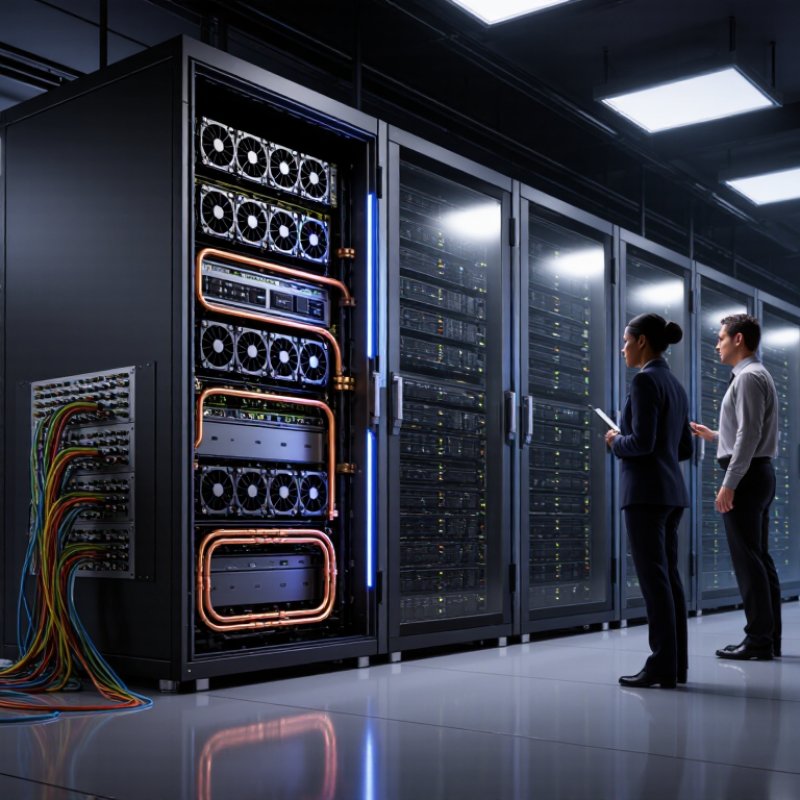
Define Your Deep Learning Workload and Performance Requirements
How to Choose a Deep Learning Server Manufacturer?
Define Your Deep Learning Workload and Performance Requirements
A server decision should begin with your workload, not a glossy specification sheet. Record model size, dataset volume, framework, batch size, and training frequency. A vision model may need high GPU throughput, while language training can depend heavily on memory and interconnect speed. Measure real jobs when possible. Track samples per second, time per epoch, response latency, and failure rates. These figures give a manufacturer a practical design target. They also expose weak assumptions.
Tips:
Run a short benchmark using representative data. Test the smallest and largest expected batch sizes. Check GPU memory usage during checkpointing and validation. Ask for measured results under your software stack, not generic peak figures. Confirm thermal behavior after several hours. Cooling noise and power limits matter in a small server room. Leave headroom for larger models. I once underestimated storage traffic, and training stalled during frequent checkpoint writes. That mistake changed my purchasing checklist.
Performance requirements should include more than raw speed. Define acceptable training time, inference latency, uptime, expansion capacity, and support response. A reliable manufacturer should explain component choices and document test conditions clearly. Request firmware policies, spare-part availability, warranty terms, and remote diagnostics. Ask whether the proposed system can support future accelerators or additional memory. Avoid buying maximum capacity without a workload model. It can increase cost and cooling demands without improving results. Yet forecasts are imperfect. Revisit them every quarter as data, models, and users change.
Compare Server Hardware, Accelerators, Memory, and Storage Options
Choosing a deep learning server manufacturer starts with workload evidence, not impressive specifications. Training image models, language models, and recommendation systems can demand very different hardware. Ask for benchmark results using your dataset or a similar model. Generic scores often hide inefficient data pipelines.
Examine the processor, accelerator support, and thermal design together. A powerful accelerator may remain idle when the processor cannot prepare batches quickly. Check interconnect bandwidth, power limits, cooling capacity, and driver compatibility. Memory deserves equal attention. Large models need sufficient system RAM, accelerator memory, and reliable error correction. During testing, monitor memory usage, temperature, and utilization every few seconds. Small gaps become expensive at scale.
Storage affects every training step. Choose fast local storage for active datasets, with enough capacity for checkpoints, logs, and temporary files. Measure sustained read speed, not only advertised peak performance. A manufacturer should explain storage endurance, replacement procedures, firmware updates, and service response times. I once underestimated checkpoint growth and filled a test volume within days. That mistake changed our sizing method. I still allow more headroom than spreadsheets recommend. Ask for transparent validation reports, component-level warranties, and on-site support options. A technically strong server can still disappoint when repairs or parts take too long.
How to Choose a Deep Learning Server Manufacturer?
Compare representative server configurations across CPU hardware, accelerator capacity, system memory, and storage. The chart uses a 0–100 index normalized against the highest capacity shown, allowing different hardware specifications to be compared in one view.
Reference capacities include up to 128 CPU cores, 640 GB of accelerator memory, 8 TB of system memory, and 30.72 TB of local NVMe storage. These are representative, brand-neutral configurations intended to support hardware selection discussions.
Evaluate Manufacturer Reliability, Customization, and Technical Support
How to Choose a Deep Learning Server Manufacturer?
When comparing deep learning server manufacturers, reliability should be tested through evidence, not polished specifications. Ask for burn-in procedures, failure-rate data, component traceability, and clear warranty terms. Check whether systems use ECC memory, redundant power supplies, stable cooling, and validated firmware. Request a sample diagnostic report. A quiet test room reveals little. Under sustained GPU loads, heat and fan noise can expose weak engineering. In practical evaluations, I also measure recovery time after a power or network interruption.
Customization matters when your workload does not fit a standard configuration. Discuss GPU count, PCIe lane allocation, storage layout, rack depth, and power limits before signing. A capable manufacturer should explain trade-offs plainly. For example, adding accelerators may require stronger cooling and a different power distribution plan. Ask for compatibility testing with your frameworks, drivers, and orchestration tools. Small oversights become expensive. One imperfect assumption can delay deployment for weeks. Document every requested change in the quotation and acceptance checklist.
Technical support is often the difference between uptime and an unfinished installation. Look for engineers who understand distributed training, driver conflicts, thermal alerts, and failed components. Confirm response targets, remote diagnostic procedures, replacement-part availability, and escalation paths. Support should include firmware guidance and post-installation testing, not only ticket submission. Do not rely on verbal promises. Request service terms in writing. During procurement, I prefer manufacturers that admit configuration limits and explain risks clearly. That honesty is more useful than an impressive sales presentation.
Assess Total Ownership Costs, Energy Use, and Upgrade Flexibility
How to Choose a Deep Learning Server Manufacturer?
A deep learning server’s purchase price is only the visible part of ownership. Calculate electricity, cooling, maintenance, software, facility changes, and disposal costs. The International Energy Agency’s Energy and AI report estimates data centers used 415 TWh globally in 2024. It projects demand could reach 945 TWh by 2030. That growth makes energy efficiency a procurement requirement, not a marketing detail.
Ask manufacturers for measured power at idle, training load, and peak accelerator use. Compare those figures with your local electricity tariff and cooling overhead. The Uptime Institute’s 2024 Global Data Center Survey reported an average facility PUE of 1.56. A server that performs well but raises room temperature can increase the real bill. Measure performance per watt, not performance alone. Small errors matter.
Upgrade flexibility protects the budget when models change unexpectedly. Check accelerator support, power-delivery capacity, memory expansion, storage lanes, and cooling headroom. The server should accept future components without replacing its chassis or rack infrastructure. Request documented thermal limits and multi-year firmware support. However, flexibility is not automatically economical. Extra slots may consume power and remain unused. A spreadsheet can still lie if utilization assumptions are optimistic. Validate estimates with a pilot workload, utility invoices, and independent service records.
How to Choose a Deep Learning Server Manufacturer? - Assess Total Ownership Costs, Energy Use, and Upgrade Flexibility
Representative, brand-neutral server profiles for comparing acquisition cost, energy consumption, support, and upgrade flexibility.
| Evaluation Dimension |
Profile A
4-GPU Air-Cooled |
Profile B
8-GPU Dense |
Profile C
8-GPU Modular Liquid-Ready |
Assessment Focus |
| Typical chassis size |
2U |
4U |
6U–8U |
Confirm rack depth, weight limits, and available power circuits. |
| GPU capacity at purchase |
4 |
8 |
8 |
Higher density can reduce server count but increases cooling and power requirements. |
| CPU and system memory |
2 CPUs; up to 1 TB RAM |
2 CPUs; up to 2 TB RAM |
2 CPUs; up to 4 TB RAM |
Check memory-slot availability, supported module sizes, and CPU upgrade paths. |
| Local NVMe storage at purchase |
8 TB |
16 TB |
30 TB |
Verify hot-swap support, drive-bay count, RAID options, and future storage expansion. |
| Initial server acquisition cost |
US$32,000 |
US$58,000 |
US$76,000 |
Request an itemized quotation covering GPUs, CPUs, memory, storage, networking, rails, and installation. |
| Three-year hardware support estimate |
US$6,000 |
US$10,500 |
US$13,500 |
Compare response time, on-site service, parts coverage, exclusions, and support after warranty expiration. |
| Measured or planned IT load at 70% ML utilization |
2.2 kW |
4.8 kW |
5.6 kW |
Ask for power measurements at idle, typical training load, and maximum accelerator load. |
| Estimated annual facility energy |
17,169 kWh |
37,207 kWh |
43,028 kWh |
Calculated using 8,760 hours/year, 70% average utilization, and a PUE of 1.40. |
| Estimated annual electricity cost |
US$2,060 |
US$4,465 |
US$5,163 |
Calculated at US$0.12 per kWh; replace this rate with the local utility tariff. |
| Three-year energy cost |
US$6,180 |
US$13,395 |
US$15,489 |
Energy costs may exceed hardware savings when servers run continuously at high utilization. |
| Estimated three-year TCO |
US$44,180 |
US$81,895 |
US$104,989 |
Acquisition cost + three-year support + three-year electricity cost; excludes software, staffing, taxes, and facility construction. |
| GPU replacement without replacing the chassis |
Usually yes |
Yes, subject to power limits |
Yes, with validated cooling kits |
Confirm physical clearance, auxiliary power connectors, firmware support, and thermal qualification. |
| Expansion capability |
Limited PCIe and power headroom |
Moderate; typically full at purchase |
Highest; modular power and cooling |
Review spare PCIe slots, power-supply capacity, cable routing, and upgrade pricing. |
| Cooling requirement |
Standard data-center air cooling |
High-capacity air or rear-door heat exchanger |
Direct liquid cooling recommended |
Validate rack cooling capacity, coolant distribution, leak detection, and maintenance procedures. |
| Recommended use case |
Small teams and mixed workloads |
High-throughput training and inference |
Long-term scale-out and dense training |
Choose based on utilization, growth forecast, facility limits, and model-development workload. |
Calculation basis:
Three-year TCO figures are scenario calculations rather than supplier quotations. Annual facility energy =
IT load × 8,760 hours × 70% utilization × PUE 1.40. Electricity cost uses US$0.12 per kWh.
Actual results vary with workload, utility rates, cooling efficiency, hardware configuration, and service-level requirements.
Verify Compliance, Delivery Capability, and Long-Term Service Terms
When choosing a deep learning server manufacturer, compliance evidence should be more than a downloadable logo. Ask for current certificates, test reports, and clear explanations of covered facilities. Check electrical safety, electromagnetic compatibility, environmental handling, data protection, and import requirements for your region. Request serial-level traceability for GPUs, power supplies, memory, and network cards. Paperwork matters. Still, documents can age. Confirm renewal dates and audit ownership before signing.
Delivery capability becomes visible when a supplier discusses constraints instead of promising instant availability. Ask for a written build schedule, component allocation, factory acceptance testing, and shipment milestones. Clarify how shortages are handled and whether substitute parts require your approval. Inspect packaging standards, shock indicators, and arrival procedures for heavy rack equipment. Run a pilot order. I once accepted an optimistic date and underestimated site preparation. Power circuits, cooling, rack space, and receiving access delayed deployment by nearly three weeks. This was partly my mistake.
Long-term service terms deserve the same scrutiny as hardware specifications. Look for defined response times, escalation paths, remote support limits, onsite coverage, and replacement-part availability. Ask whether firmware updates remain accessible after the warranty period. Review repair exclusions, labor charges, travel fees, and failed-accelerator procedures. Good contracts name measurable service levels. Vague promises create expensive arguments. Request references from organizations with similar workloads and deployment scale. Then test support with a technical question. The speed and precision of the reply often reveal more than a polished sales presentation.
FAQS
Request burn-in procedures, failure-rate data, component traceability, and written warranty terms. Ask for a sample diagnostic report. Polished specifications are not enough.
Look for ECC memory, redundant power supplies, stable cooling, and validated firmware. Test the server under sustained accelerator loads. Heat and fan noise may reveal weak engineering.
Interrupt the power and network connections during testing. Measure recovery time and check whether training restarts correctly. Quiet testing proves little.
Confirm accelerator count, PCIe lane allocation, storage layout, rack depth, and power limits. Record every change in the quotation and acceptance checklist.
More accelerators may require stronger cooling and revised power distribution. They can also reduce available expansion space. One wrong assumption may delay deployment for weeks.
Confirm response targets, remote diagnostics, replacement-part availability, and escalation paths. Support should cover drivers, firmware, thermal alerts, and failed components. Ticket submission alone is insufficient.
Include electricity, cooling, maintenance, software, facility changes, and disposal. A purchase price is only the visible part. Local utility bills make estimates more realistic.
Request measured power at idle, training load, and peak accelerator use. Calculate performance per watt. Room cooling can increase the final bill.
Check accelerator support, power-delivery capacity, memory expansion, storage lanes, and cooling headroom. Extra slots may consume power while remaining unused. Flexibility is not automatically economical.
Validate assumptions with a pilot workload, utility invoices, and independent service records. A spreadsheet can still deceive. My estimate may be wrong.
Conclusion
Choosing the right deep learning server manufacturer begins with a clear understanding of your workload, including model size, training frequency, dataset volume, and required processing speed. Evaluate the server’s processors, GPU or other accelerator options, memory capacity, storage performance, networking, and cooling design to ensure they can support both current projects and future growth. A reliable manufacturer should also offer flexible configurations, consistent product quality, responsive technical support, and practical assistance with system integration and troubleshooting.
Beyond initial performance, consider the total cost of ownership, including purchase price, energy consumption, maintenance, software compatibility, and potential replacement expenses. Look for systems that allow upgrades to memory, storage, accelerators, and networking components without requiring a complete replacement. Before making a decision, verify the manufacturer’s compliance with relevant regulations, delivery capability, warranty coverage, spare-parts availability, and long-term service terms. A balanced assessment of performance, reliability, cost, flexibility, and support will help you select a server solution that remains valuable as your deep learning requirements evolve.

 Aiserveroem