Choosing an ai computing server manufacturer is a business decision, not merely a hardware purchase. The right partner can influence model training speed, application stability, operating costs, and future expansion. A dependable manufacturer should explain technical choices clearly, without hiding behind impressive specifications. Experience matters when servers must run continuously under demanding workloads.
Look beyond processor names and headline performance. Examine GPU compatibility, memory capacity, storage speed, networking options, and cooling design. A server may look powerful on paper yet struggle in a crowded data center. Ask for independent benchmark details, real deployment examples, warranty terms, and replacement procedures. Reliable manufacturers usually provide documented testing, traceable components, and knowledgeable engineering support. Their teams should understand virtualization, power planning, rack density, and workload-specific optimization.
Security and compliance also deserve practical attention. Confirm firmware controls, update policies, access management, and supply-chain transparency. A serious supplier should discuss energy consumption and maintenance, not only purchase price. References from organizations with similar workloads can reveal slow support or unexpected integration costs. This research takes time. It is worth it.
No checklist is perfect. Some benchmark results may not match your data, software, or cooling environment. A careful evaluation therefore includes a pilot installation, acceptance criteria, and conversations with current customers. The strongest choice is rarely the cheapest quote or the largest brand. It is the manufacturer that combines proven engineering, honest communication, measurable reliability, and support that remains responsive after delivery. That distinction becomes visible when a training job runs overnight, temperatures rise, or a replacement component is urgently needed.
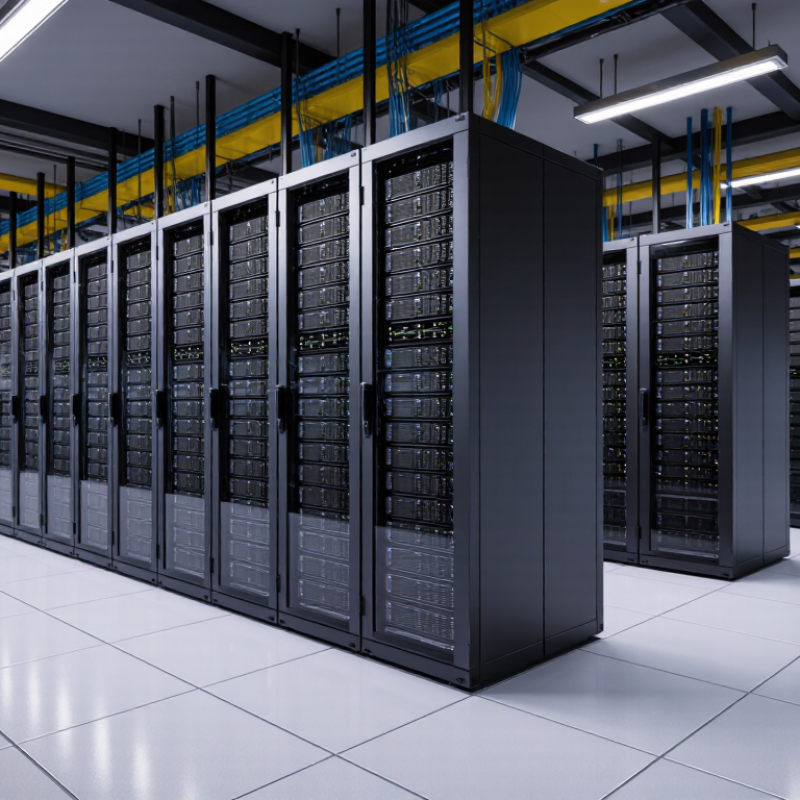
How to Choose an AI Computing Server Manufacturer?
Define Your AI Computing Requirements and Deployment Goals
Choosing an AI computing server manufacturer starts with a clear definition of your workload. Identify the models, data sizes, training frequency, and expected user volume. A language model serving 50 daily users needs different hardware from a vision system processing thousands of images hourly. Measure latency, throughput, and uptime targets. Do not rely on vague terms like “high performance.”
In practical deployments, I record GPU memory usage, storage growth, network traffic, and power consumption during a small pilot. These details reveal bottlenecks that product brochures often overlook. Training may require fast interconnects and large memory capacity. Inference may prioritize low response times, quiet cooling, and stable remote management. Include operating temperatures and rack space in the specification. Physical limits matter.
Your deployment goal should also guide the manufacturer evaluation. Decide whether the server will support research, private data processing, production inference, or several workloads together. Define acceptance tests before requesting quotations. For example, the system might need to process 200 requests per second while maintaining a two-second response time. Leave spare capacity for growth. My early estimates have sometimes been too optimistic, especially for storage and cooling. That is worth admitting. A reliable supplier should discuss these risks, provide measurable validation, and explain upgrade paths without hiding limitations.
| Requirement Dimension | Typical AI Computing Requirement | Deployment Goal | What to Verify with the Server Manufacturer |
|---|---|---|---|
| AI Workload Type | Training Large datasets, distributed computing, high memory bandwidth, and fast accelerator-to-accelerator communication. | Reduce model training time and support repeatable experiments for large language models, computer vision, or scientific workloads. | Confirm support for multi-accelerator configurations, distributed training frameworks, containerized software, and workload-specific performance testing. |
| Inference Profile | Real-Time Low latency, predictable response time, sufficient accelerator memory, and efficient request scheduling. | Serve interactive applications, recommendation systems, image analysis, or conversational AI with stable response times. | Request measured latency and throughput results at the intended model size, batch size, precision, concurrency level, and power limit. |
| Accelerator Capacity | Accelerator count and memory should match the model size, batch size, training method, and expected growth. Larger models may require multiple accelerators. | Start with an appropriately sized configuration while retaining a practical upgrade path for additional workloads. | Check supported accelerator quantity, physical spacing, thermal design, power connectors, firmware compatibility, and future expansion options. |
| System Memory | Adequate RAM is needed for dataset loading, preprocessing, caching, orchestration, and host-side operations. A common planning range is 4–8 times the combined accelerator memory for data-intensive workloads. | Prevent data pipelines from becoming a bottleneck and allow larger datasets or more simultaneous services to run efficiently. | Verify maximum memory capacity, supported memory type, memory-channel population rules, error correction, and upgrade cost. |
| Interconnect and Networking | Multi-node training benefits from high-bandwidth, low-latency networking. Common deployment choices include 25, 50, 100, 200, or 400 gigabit Ethernet, depending on cluster scale and workload. | Scale from one server to a cluster without excessive communication overhead between nodes. | Evaluate PCIe topology, accelerator peer-to-peer support, network adapter placement, fabric compatibility, cable options, and validated cluster designs. |
| Storage and Data Pipeline | Use fast solid-state storage for operating systems, containers, checkpoints, and active datasets. Capacity should reflect dataset size, checkpoint frequency, and retention policy. | Shorten data-loading and checkpoint times while maintaining reliable access to training and inference assets. | Confirm drive bays, NVMe support, RAID options, hot-swapping, boot-device redundancy, local storage bandwidth, and integration with shared storage. |
| Power and Cooling | High-performance accelerator servers may require several kilowatts per system. Actual requirements depend on accelerator count, CPU configuration, memory, storage, and utilization. | Operate continuously within facility power, rack, cooling, and electrical distribution limits. | Obtain typical and maximum power figures, rack power requirements, airflow direction, acoustic data, thermal limits, and support for air or liquid cooling where applicable. |
| Deployment Location | Data Center Private Cloud Edge Rack space, environmental conditions, remote management, security, and network availability vary by location. | Match the server design to centralized high-density computing, controlled private infrastructure, or space- and power-constrained edge sites. | Check rack-unit dimensions, rail compatibility, operating temperature and humidity ranges, remote management, secure boot, access control, and regional service coverage. |
| Reliability and Serviceability | Continuous AI services and long training jobs require dependable components, monitoring, redundant power options, and practical maintenance procedures. | Reduce unplanned downtime and limit the operational impact of component replacement or system failure. | Review component qualification, diagnostic tools, predictive monitoring, spare-part availability, on-site service options, warranty terms, and replacement procedures. |
| Software Compatibility | The platform should support the required operating system, container runtime, AI frameworks, drivers, libraries, orchestration tools, and monitoring stack. | Deploy models consistently across development, testing, and production environments. | Request a compatibility matrix, validated software images, driver update policy, firmware lifecycle information, and support for virtualization or container orchestration. |
| Scalability and Budget | Consider purchase price, software and support costs, electricity, cooling, networking, storage, and expected capacity growth over three to five years. | Achieve the required performance per dollar while avoiding over-provisioning and costly redesigns. | Compare total cost of ownership, expansion pricing, financing options, capacity planning assistance, performance-per-watt data, and lifecycle replacement plans. |
Check for 24/7 response, remote diagnostics, spare parts, and defined escalation times. Ask for a sample service agreement. It should state replacement windows, firmware help, and mixed-configuration responsibilities. A smooth sales call proves little.
Review secure boot, signed firmware, access logs, vulnerability notices, and patch procedures. Ask for independent certifications and recent audit evidence. Security covers the full lifecycle. The data center door is not enough.
Include electricity, cooling, rack space, support contracts, software compatibility, and staff time. Add possible replacement delays. A low purchase price can hide expensive overnight troubleshooting. I might still underestimate staffing costs.
Request results for the exact server configuration. Reports should include workload performance, temperatures, power use, memory errors, and stability. Ask about burn-in testing under continuous heavy loads. Short tests prove little.
Check the test method, hardware configuration, publication date, and long-term observations. Look for repeated complaints about cooling, firmware, shipping damage, or support. One complaint may be unusual. Several similar complaints need investigation.
Ask whether delivered systems matched the quotation and installation required unexpected changes. Discuss failure response times, replacement procedures, and warranty handling. Choose clients with similar workloads. Their details may contradict polished specifications.
It lets your team measure noise, airflow, rack compatibility, and performance after several hours. A laboratory result may not match a crowded data center. Test under realistic conditions. No test is perfect.
Look for repeatable evidence, clear limitations, documented revisions, and specific failure responses. Ask uncomfortable questions directly. Reliable support admits uncertainty when necessary. I would remain cautious, even after strong demonstrations.
Choosing the right ai computing server manufacturer begins with clearly defining your computing requirements, workload types, deployment environment, and future growth plans. Consider whether the server can handle intensive AI training, inference, data processing, and virtualization tasks while providing sufficient GPU, CPU, memory, storage, and networking capacity. Evaluate performance benchmarks, scalability, upgrade flexibility, and compatibility with your existing software and infrastructure. A manufacturer with strong technical expertise should also offer product customization to match your specific operational goals.
Beyond hardware, examine product quality, manufacturing consistency, warranty coverage, technical support, maintenance response times, and security practices. Calculate total ownership costs by considering energy consumption, licensing, upgrades, downtime, and long-term service expenses rather than focusing only on the initial purchase price. Before making a final decision, verify the manufacturer’s reliability through factory testing standards, independent reviews, documented case studies, and feedback from existing clients. This balanced evaluation can help you select a dependable partner that supports stable performance, secure deployment, and sustainable AI development.

 Aiserveroem