Choosing a machine learning server manufacturer is a practical infrastructure decision, not a popularity contest. A powerful GPU matters, but it cannot compensate for poor cooling, unstable drivers, or delayed support. This guide examines ten leading manufacturers shaping machine learning server deployments in 2026. It considers GPU density, accelerator compatibility, memory capacity, storage design, networking, energy use, and long-term service.
Real workloads expose differences quickly. A training server may run four high-end GPUs continuously, while an inference system may prioritize low latency and compact rack space. Airflow design becomes visible when temperatures rise inside a crowded data center. Power supplies, warranty coverage, firmware updates, and remote management also affect operating costs. These details often matter more than impressive specification sheets.
No ranking is permanent. Market conditions change.
The selections are based on manufacturer capability, documented product information, technical reputation, and practical deployment considerations. Where available, independent benchmarks and customer experiences provide useful context, although results can vary by model, software stack, and workload. A server that performs well for image training may be inefficient for language model inference. That limitation deserves attention.
This overview is designed for IT managers, researchers, system integrators, and growing businesses comparing dependable platforms. It does not promise one universal winner. Instead, it highlights where each manufacturer may fit, from dense GPU clusters to flexible workstation-class systems. Careful evaluation remains essential before purchasing, especially when budgets, data-center power, and support requirements are strict.
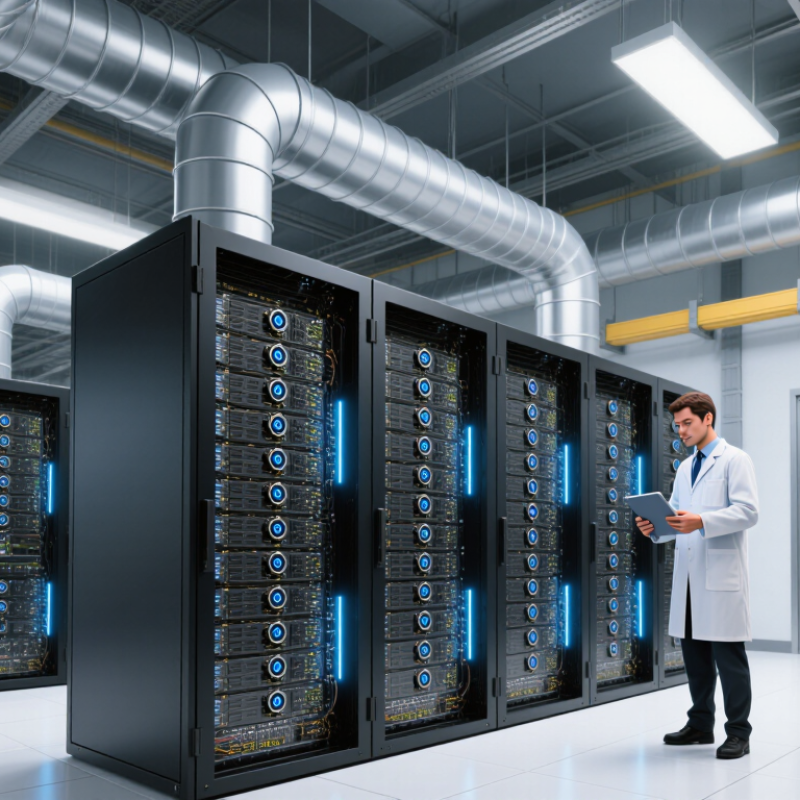
The machine learning server market is moving toward denser computing, faster memory, and better energy control. Demand comes from cloud platforms, research centers, financial services, healthcare, and industrial automation. Buyers now compare more than processor speed. They examine accelerator support, memory capacity, cooling design, network bandwidth, warranty terms, and long-term maintenance.
Experience shows that workload fit matters more than impressive specifications. Training large models needs powerful accelerators and high-speed storage. Inference often benefits from lower latency, compact systems, and predictable power use.
Some manufacturers now offer modular servers, allowing organizations to expand gradually. This reduces waste, although compatibility problems can still appear during upgrades. Market forecasts look strong, but supply delays and electricity costs remain uncomfortable uncertainties.
Tips: Define the model size, daily request volume, and acceptable response time before purchasing. Test real workloads, not only benchmark charts. Check airflow, noise, rack depth, and service access in the intended facility. Keep spare capacity, but avoid buying hardware for growth that has no clear evidence. Independent testing is useful. Still, test results may not match your data. That gap deserves attention.
Evaluating machine learning server manufacturers requires more than comparing processor counts. A reliable supplier should explain how each system handles sustained workloads, not just peak benchmark scores. Ask for test results using realistic models, batch sizes, and training durations. Short demonstrations can hide thermal throttling.
Hardware design deserves close attention. Check GPU spacing, airflow direction, power delivery, ECC memory, and available PCIe lanes. A dense chassis may look efficient, yet poor cooling can reduce performance after several hours. Liquid cooling can help, but it also adds maintenance points. No design is perfect. The manufacturer should explain these trade-offs clearly.
Service quality often separates a useful supplier from an expensive one. Examine warranty terms, replacement procedures, firmware updates, and response times for technical support. Request evidence of quality control, safety compliance, and production consistency. Supply chain transparency also matters when memory or accelerator availability changes. In my experience, clear documentation saves more time than impressive sales language. Still, documentation can become outdated quickly, so confirm every specification before purchasing. A strong evaluation includes a small pilot test with your own data, workload, monitoring tools, and power limits. Measure training stability, noise, energy use, recovery time, and support responsiveness. These practical details reveal weaknesses that a polished benchmark may miss.
The chart presents a practical, brand-neutral weighting model for comparing machine learning server manufacturers in 2026. Performance and accelerator support receive the highest weighting because GPU and accelerator architecture directly affect training and inference throughput. Total cost of ownership, scalability, memory capacity, networking, reliability, energy efficiency, software compatibility, security, and service coverage are also essential for evaluating long-term suitability.
The strongest machine learning server manufacturers in 2026 differ by engineering focus, not marketing volume. One specializes in dense GPU platforms, using eight accelerators in a short-depth chassis. Its airflow design suits training rooms, though noise can become uncomfortable. Another builds liquid-cooled systems for continuous model training. Cold plates reduce heat, but maintenance requires trained technicians. A third focuses on high-bandwidth networking, pairing fast interconnects with carefully tested firmware. Small configuration errors can still slow large workloads.
A fourth manufacturer produces flexible systems for universities and research laboratories. Its modular bays make upgrades practical when budgets change. A fifth targets inference servers, placing low-latency accelerators near application databases. This approach saves response time, yet it may offer less training capacity. Another develops rugged edge servers with filtered air intake and vibration-resistant storage. Field repair is easier. A seventh company emphasizes energy efficiency, measuring performance per watt under sustained workloads rather than brief benchmarks. That test is more useful, although published results can vary by model.
The eighth profile is a specialist in custom liquid loops and rack integration. It can simplify deployment, but proprietary parts may limit future choices. A ninth manufacturer combines secure boot, hardware encryption, and detailed component tracking. These features support accountable procurement and safer operations. The tenth focuses on global service coverage, stocking replacement fans, power supplies, and accelerator modules near major data centers. Response quality depends on local staffing. Careful buyers should compare warranty terms, thermal limits, repair procedures, and verified workload results. “Best” is never permanent. Even experienced teams sometimes overbuy hardware before measuring actual utilization.
10 Best Machine Learning Server Manufacturers in 2026
Choosing among the 10 best machine learning server manufacturers requires more than comparing accelerator counts. A strong system combines high memory bandwidth, fast interconnects, reliable storage, and efficient cooling. Practical testing should use your workloads, not only advertised peak performance. Training a language model can expose network delays that synthetic benchmarks miss. Small details matter, too. Check rack depth, power limits, noise levels, and serviceable components before ordering.
Scalability separates a useful platform from an expensive bottleneck. Look for support for additional accelerators, larger memory pools, and faster network fabrics. Modular designs can extend service life and reduce replacement costs. However, expansion is not always seamless. Firmware versions may conflict, and power distribution can limit future upgrades. A careful buyer should request validated configuration guides and documented upgrade paths.
Support deserves equal attention. Reliable manufacturers provide clear diagnostics, rapid replacement procedures, security updates, and engineers who understand distributed training. Measure response commitments against your actual operating hours. A generous warranty means little if parts remain unavailable for weeks. Documentation quality is another practical test. Some specifications appear impressive but omit thermal limits or sustained performance. My own evaluations have also shown that benchmark results change after extended workloads, so short tests can create false confidence. A small pilot deployment is often worth the added time.
Choosing the right machine learning server in 2026 requires more than comparing processor counts. Start with the workload. Image training may depend on GPU memory, while language models often demand fast interconnects, large system memory, and strong storage throughput. A server with four accelerators is not automatically better. Measure training time, inference latency, and power use with representative datasets.
Test before purchasing.
During evaluation, monitor memory errors, fan noise, thermal throttling, and network stability. A useful test includes repeated training runs inside a controlled room, with logs captured every few minutes. Storage should handle continuous dataset loading without slowing the accelerators. High-speed networking matters when several servers exchange model parameters. Cooling also deserves attention. Dusty racks and restricted airflow can reduce performance quickly.
Procurement teams should inspect warranty terms, firmware update policies, security controls, and replacement-part availability. Calculate the full operating cost, including electricity, cooling, installation, and administration. A cheaper server may become expensive after eighteen months. Independent benchmark results help, but they can mislead when software versions or datasets differ. Reproduce important claims whenever possible. I would also leave expansion space for memory, storage, and networking. This is easy to overlook. Some forecasts will be wrong, especially when model sizes change faster than expected. A flexible configuration can protect the budget while keeping future experiments practical.
An objective comparison framework based on measurable machine learning server capabilities
| Evaluation Profile | Best-Fit Workload | GPU Capacity | CPU and Memory Target | High-Speed Networking | Storage Design | Recommended Deployment | Selection Priority |
|---|---|---|---|---|---|---|---|
| Profile 01 | Large language model training | 8 high-end data-center GPUs | 2-socket server; 512 GB–2 TB ECC memory | 200–400 Gb/s InfiniBand or Ethernet | NVMe scratch storage plus 100 TB+ shared dataset tier | Dedicated AI cluster | GPU interconnect, cooling, power efficiency |
| Profile 02 | Computer vision training | 4–8 professional GPUs | 32–64 CPU cores; 256–512 GB ECC memory | 100–200 Gb/s Ethernet or InfiniBand | 8–30 TB local NVMe with parallel file access | On-premises or private cloud | GPU density, data throughput, expandability |
| Profile 03 | Model fine-tuning and instruction tuning | 2–4 GPUs with at least 24–80 GB memory each | 24–48 CPU cores; 256 GB–1 TB ECC memory | 100 Gb/s Ethernet preferred | 4–16 TB NVMe with automated backup | Departmental data center | GPU memory, serviceability, acquisition cost |
| Profile 04 | Inference at high request volume | 1–4 inference-optimized GPUs | 16–64 CPU cores; 128–512 GB ECC memory | 25–100 Gb/s Ethernet with redundant links | Enterprise SSDs with low-latency RAID | Production data center or colocation | Latency, redundancy, remote management |
| Profile 05 | Retrieval-augmented generation | 1–2 GPUs with 24–80 GB memory each | 16–32 CPU cores; 128–512 GB ECC memory | 25–100 Gb/s Ethernet | 20 TB+ NVMe or all-flash storage for vector indexes | Enterprise application environment | Memory capacity, storage IOPS, database support |
| Profile 06 | Research and experimentation | 1–4 mid-range or high-end GPUs | 16–48 CPU cores; 128–512 GB ECC memory | 10–100 Gb/s Ethernet | 4–16 TB NVMe with expandable drive bays | University, laboratory, or team server room | Flexibility, upgrade path, operating noise |
| Profile 07 | Large-scale tabular machine learning | Optional; 0–2 GPUs depending on algorithm | 32–96 CPU cores; 256 GB–1 TB ECC memory | 25–100 Gb/s Ethernet | High-capacity NVMe or hybrid SSD/HDD storage | General-purpose enterprise server room | CPU performance, memory bandwidth, total cost |
| Profile 08 | Distributed multi-node training | 4–8 GPUs per node across multiple nodes | Dual-socket nodes; 512 GB–2 TB ECC memory | 200–400 Gb/s fabric with RDMA support | Parallel file system or high-throughput shared storage | Research or hyperscale-style cluster | Inter-node bandwidth, synchronization, orchestration |
| Profile 09 | Edge and real-time inference | 1–2 compact or low-power accelerators | 8–32 CPU cores; 64–256 GB ECC memory | 1–25 Gb/s Ethernet; optional wireless connectivity | 1–8 TB industrial or enterprise NVMe | Retail, manufacturing, telecom, or remote sites | Compact design, thermal tolerance, reliability |
| Profile 10 | Managed AI infrastructure and mixed workloads | 2–8 GPUs with flexible partitioning | 32–96 CPU cores; 256 GB–2 TB ECC memory | 100–400 Gb/s Ethernet or InfiniBand | Tiered NVMe, shared storage, and backup integration | Private cloud or hybrid cloud | Lifecycle support, automation, security compliance |
Compare sustained workload results, not only peak benchmark scores. Request tests using realistic models, batch sizes, and training durations. Short demos can hide thermal throttling. A small pilot with your data is better evidence.
GPU spacing affects airflow, temperature, and long-term stability. Dense chassis designs save space, but restricted cooling may reduce performance after several hours. Check airflow direction and available PCIe lanes. More accelerators are not always better.
Liquid cooling can support continuous training and reduce heat. It also adds pumps, cold plates, and maintenance points. Trained technicians may be necessary. I would not choose it without reviewing service procedures.
Examine power delivery, ECC memory, GPU spacing, airflow, PCIe lanes, and thermal limits. Also check noise during sustained workloads. A quiet room can become uncomfortable quickly. Specifications may change, so confirm them before purchasing.
Review warranty coverage, replacement procedures, firmware updates, and technical support response times. Ask where replacement fans, power supplies, and accelerator modules are stocked. Local staffing matters. A global promise may still produce slow help.
Modular bays can support gradual upgrades when budgets change. This design may suit research teams with uncertain workloads. Confirm upgrade compatibility and power requirements. Flexibility sounds useful, but unused modules still cost money.
Measure training stability, energy use, noise, recovery time, and support responsiveness. Use your own data and monitoring tools. Apply realistic power limits. Record performance after several hours, not only during startup.
Training systems often prioritize accelerator capacity and high-bandwidth networking. Inference systems emphasize low latency near application databases. Edge systems may use filtered air intake and vibration-resistant storage. The best choice depends on actual utilization, not reputation.
Performance per watt reveals operating costs more clearly than brief benchmark results. Long training sessions expose heat and power problems. Published results can vary by model. I would treat them as clues, not proof.
Yes. Teams sometimes overbuy before measuring utilization. Proprietary parts may also limit future choices. Documentation can become outdated. Recheck every specification, then test the system with real workloads.
In 2026, the machine learning server market is shaped by growing demand for faster model training, real-time inference, energy efficiency, and flexible deployment across cloud, on-premises, and hybrid environments. This overview examines how leading manufacturers respond to these needs through advanced processors, accelerator support, high-speed memory, optimized storage, and reliable networking. It also introduces the key criteria for evaluating a machine learning server manufacturer, including computing performance, system expandability, thermal design, power efficiency, software compatibility, security, warranty coverage, and technical support.
The profiles of the 10 best machine learning server manufacturers highlight different strengths in hardware design, workload optimization, scalability, and service quality without focusing on brand identity. A practical comparison helps readers understand how server configurations affect training speed, inference efficiency, total ownership costs, and long-term growth. Finally, the guide explains how to select the right machine learning server in 2026 by matching hardware capabilities, budget, workload type, deployment environment, future expansion plans, and support requirements.

Aiserveroem